The previous chapter followed Kanem-Borno around Lake Chad, where a political tradition grew powerful enough to survive for centuries.
Farther west, something different was happening.
There was no single ruler bringing all of Hausaland under one crown. Instead, separate cities developed their own governments, markets, rulers and territories.
Some competed with one another. Some went to war. Some traded with each other. Their fortunes rose and fell at different times.
Yet they increasingly belonged to a recognisable cultural and linguistic world.
Today, Hausa is one of Africa’s major languages. Its traditional geographical core includes Kano, Katsina and Zaria, extending across much of northern Nigeria and into present-day Niger. Linguistically, Hausa belongs to the Chadic branch of the Afroasiatic language family.
But the creation of Hausaland was a long process.
There was never one ancient country called Hausaland
When we say Hausaland, it is easy to imagine an old country with fixed borders.
That is misleading.
Historically, Hausaland referred to a broad cultural region occupied by Hausa-speaking communities and several political states. There was no permanent central government controlling all of them.
Among the best-known kingdoms were Kano, Katsina, Daura, Zazzau, Gobir, Rano and Biram.
Later tradition grouped these as the Hausa Bakwai, meaning the Seven Hausa States.
Other important states—including Kebbi and Zamfara—also became part of the wider political history of Hausaland.
But even the familiar list of seven should be treated carefully.
Historians have questioned how old the exact grouping really is. Research on early Hausa history suggests that traditions about the seven kingdoms preserve important memories, but should not automatically be read as a literal account of how seven states were created at the same moment.
The reality was much messier.
Settlements expanded at different times. Political institutions changed. Communities mixed. Some towns became powerful while others remained smaller.
Hausaland was built gradually.
Kano grew around Dala Hill
Kano provides one of the clearest examples.
The city’s early settlement history is associated with Dala Hill, which UNESCO identifies as the nucleus from which Kano’s urban and political development expanded.
The hill mattered partly because of its natural resources.
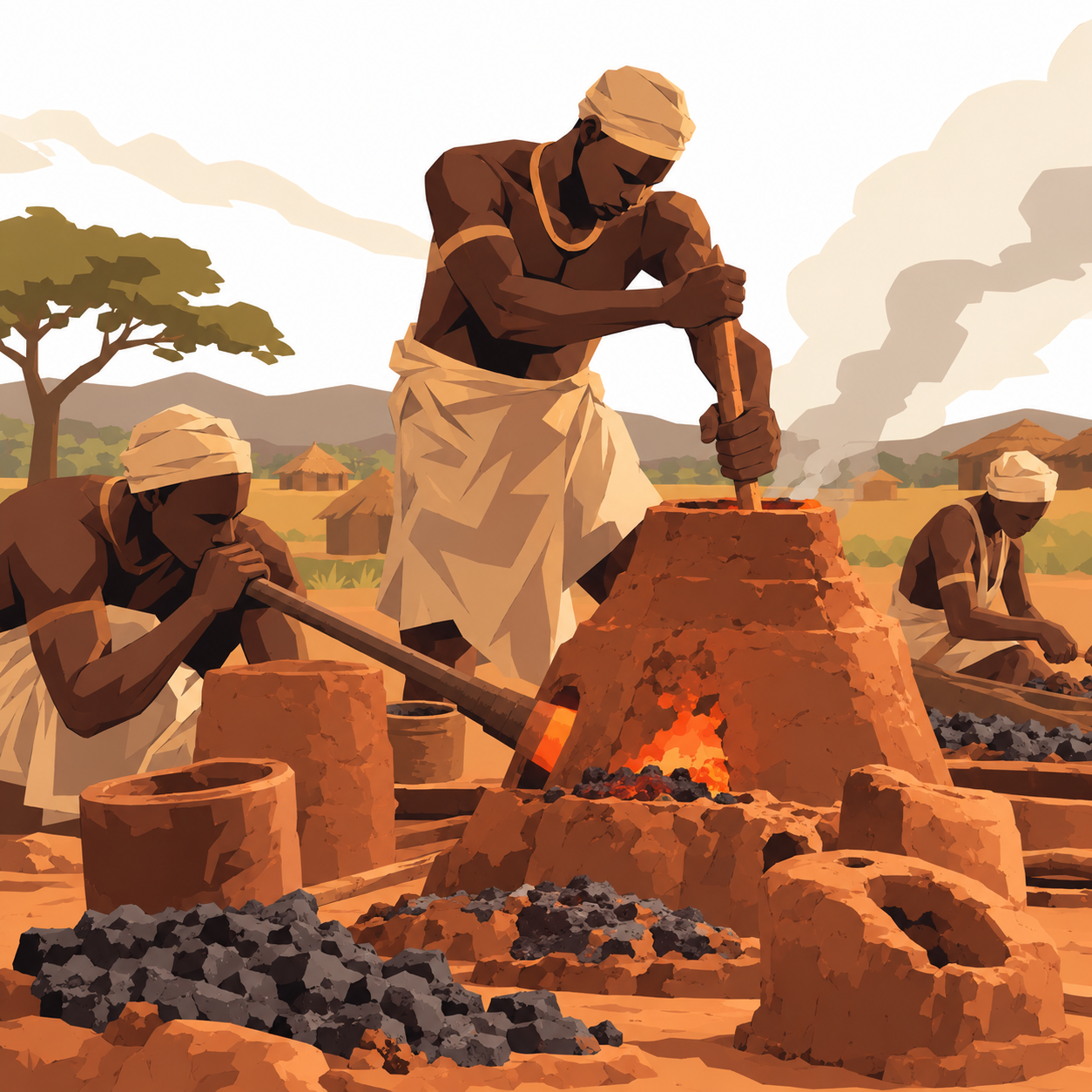
Communities in the area developed crafts and industries while settlements gradually expanded around it. Over time, political authority became more organised and Kano developed into a major city.
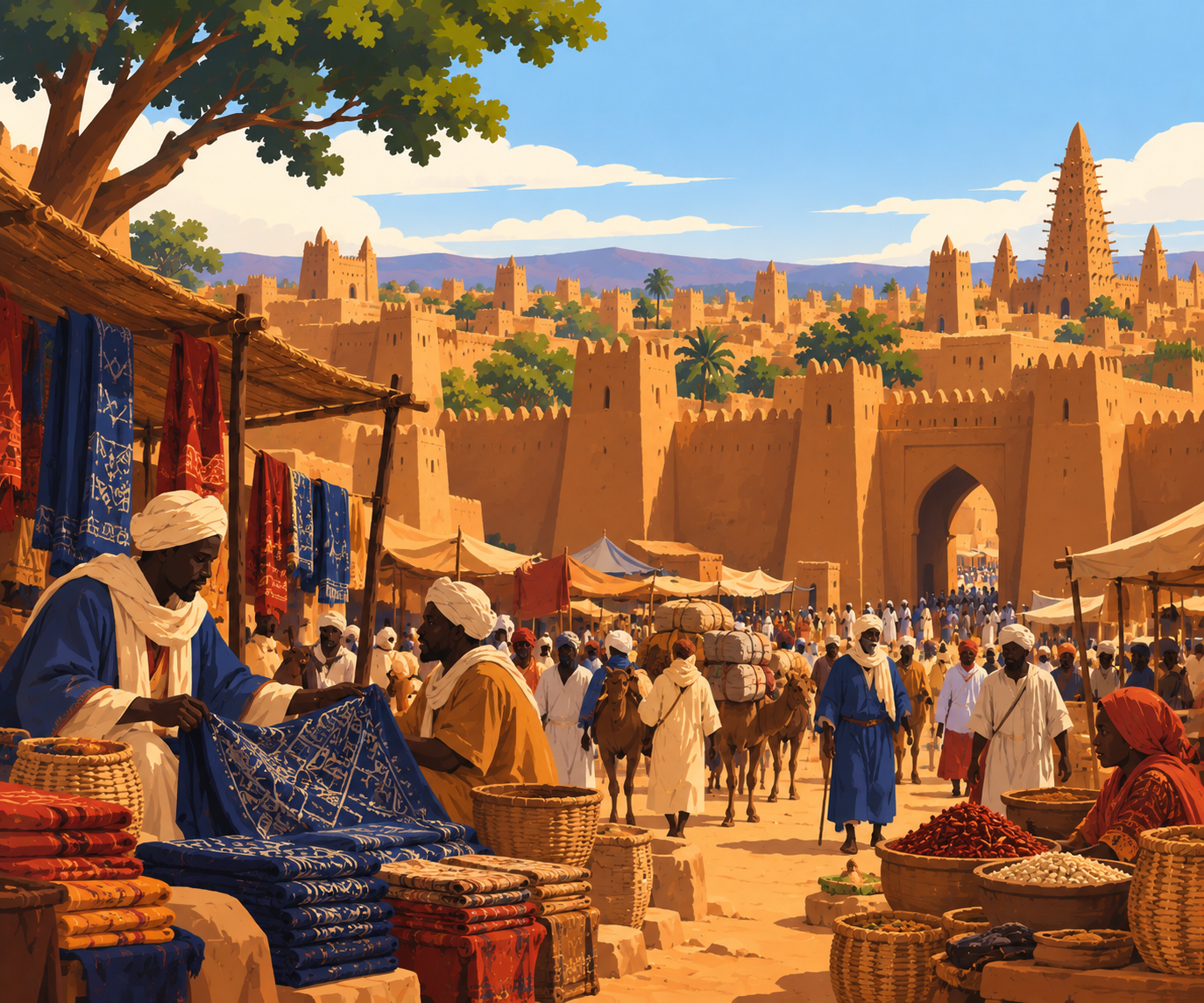
Later walls enclosed a large urban area.
Those walls were not merely decoration.
A wall could define the city, control entrances, improve defence and demonstrate the ability of rulers and communities to organise labour on a large scale.
Inside, urban life became increasingly complex.
There were homes, workshops, religious spaces, political institutions and markets.
Kano was becoming more than a settlement.
It was becoming a city-state.
But written traditions make the early dates difficult
Much of what is traditionally known about Kano’s rulers comes from the Kano Chronicle, a historical record compiled from older traditions.
It is extraordinarily valuable.
It is also not a modern archive written alongside every event it describes.
That distinction becomes especially important when dealing with Kano’s earliest rulers. Historians have debated the chronology of the early Hausa kingdoms for decades, and even major events such as the early spread of Islam into Kano have competing dates in different sources. UNESCO’s General History of Africa, for example, notes disagreement over whether an important arrival of Wangara Muslims belongs to the fourteenth or fifteenth century.
So early Hausa history cannot simply be reconstructed by taking every traditional date literally.
Researchers compare chronicles with oral traditions, archaeology, linguistics and outside written sources.
Sometimes they agree.
Sometimes they complicate one another.
Daura tells its beginning through Bayajidda
No story is more famous in traditional accounts of Hausa origins than the legend of Bayajidda.
There are several versions, but the basic story follows a foreign traveller who eventually reaches Daura.
There, according to the legend, the people depended on a well whose water was guarded by a great snake called Sarki. Because of the snake, water could supposedly be collected only at certain times.
Bayajidda killed it.
The queen of Daura, commonly called Daurama, eventually married him. Their descendants became associated with the foundation of the Hausa kingdoms.
The story became an explanation for the Hausa Bakwai—the seven traditional Hausa states.
It is a powerful cultural tradition.
But it is not the same thing as an archaeological record.
Scholars have spent decades trying to determine whether the legend preserves memories of actual migrations, political change or relationships between different communities. One historical study argued that parts of it might preserve memories of events around the tenth century, while also recognising that the legend contains several different traditions.
Other scholarship has challenged older assumptions about foreign origins more broadly.
The safest conclusion is therefore not that one traveller literally founded seven kingdoms.
It is that the Bayajidda story became an important way Hausa societies explained political relationships and shared origins.
Hausa identity itself developed over time
This is another reason the story is more complicated than a list of kings.
People living across northern Nigeria did not necessarily wake up one morning with a single Hausa identity.
Language and culture expanded through interaction.
Historical linguistic research places Hausa within the Chadic language family, while historians examining linguistic geography have argued that Hausa expanded across the northern Nigerian savanna while absorbing communities that had already lived there.
That means Hausa history includes assimilation.
Different communities could adopt the language. Political relationships could spread cultural practices. Trade could connect distant settlements. Intermarriage could create new identities.
The Hausa world grew not only through conquest, but through people interacting.
A language could travel farther than a kingdom’s army.
That would eventually become one of Hausa’s greatest historical strengths.
Cities changed the political landscape
As settlements expanded, political institutions became more elaborate.
Rulers generally carried the title sarki, while officials and titled elites performed different administrative, military, economic and ceremonial roles.
But these institutions were not necessarily identical from one Hausa state to another.
Even kingship itself changed.
A major scholarly reassessment of pre-jihad Hausa history argued that political systems in places such as Katsina developed through complicated relationships between older local authorities and newer communities of Muslim merchants and scholars. Similar tensions may also have shaped Kano, Gobir, Zaria and other states.
This is important.
The Hausa kingdoms were not political systems designed once and then preserved unchanged.
They evolved.
Rulers negotiated with powerful families, religious authorities, traders and local leaders.
Cities made those relationships increasingly complex.
Markets made the cities powerful
If walls represented political organisation, markets represented connection.
Northern Nigeria sat between several economic regions.
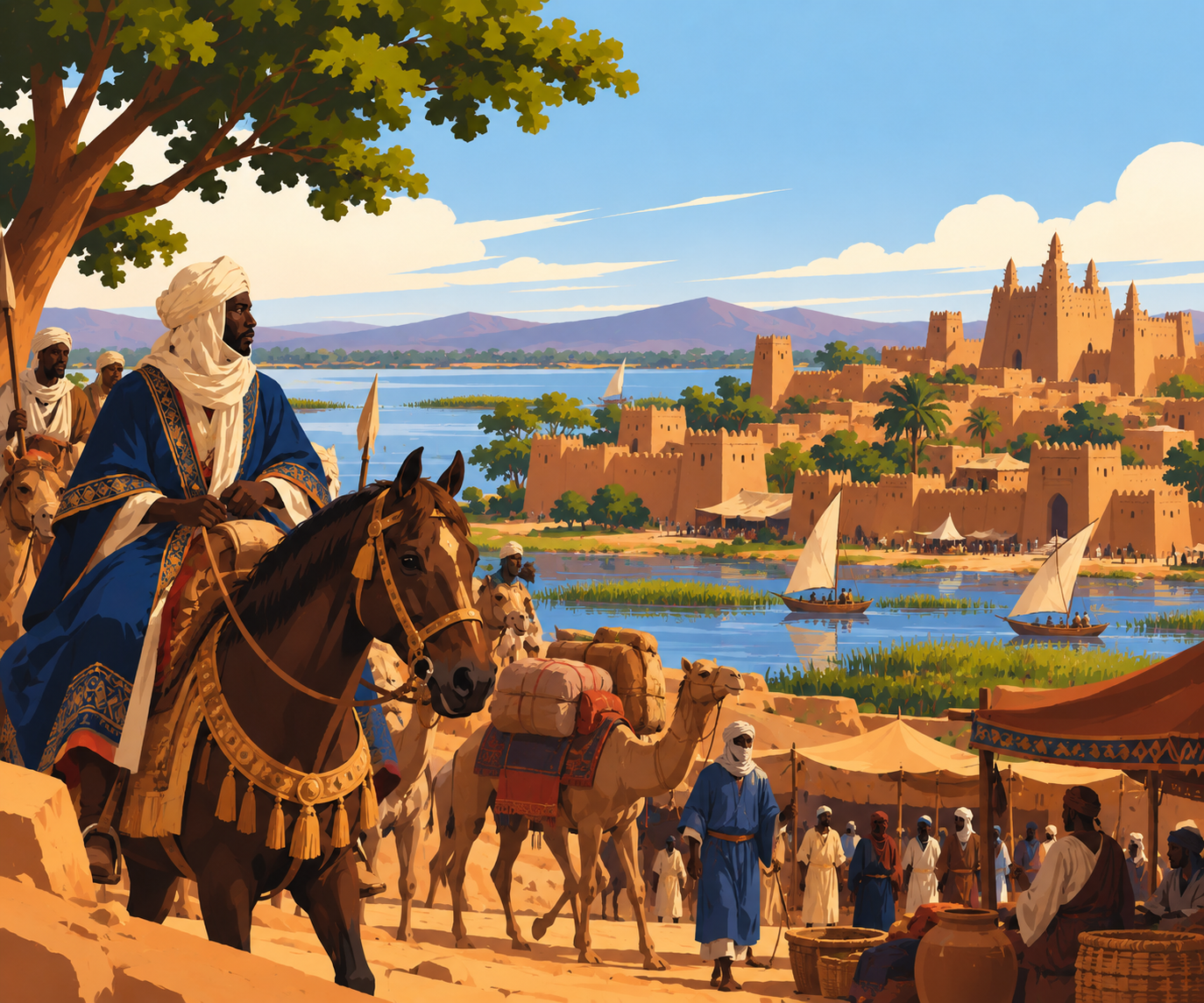
To the north were trans-Saharan routes connecting the savanna with North Africa. To the west were major states and commercial networks across the Sahel. To the east was the Lake Chad world. To the south were agricultural and forest regions producing other commodities.
Hausa cities occupied valuable positions between them.
Kano became particularly important.
Its markets attracted merchants, while local crafts became important commercial products. Leatherwork, textiles, metalwork and agricultural goods formed part of a growing economy.
UNESCO describes Kano’s Kurmi Market as a historic centre where local goods were exchanged alongside products arriving through long-distance trade.
The city was not powerful simply because a king lived there.
People wanted to trade there.
Cloth helped put Kano on the map
Among Kano’s most important industries was textile production.
Cotton could be grown, spun, woven and dyed before being sold through regional commercial networks.
Over time, Kano became particularly famous for cloth and dyeing.
This matters because precolonial African cities were sometimes wrongly imagined as primarily administrative centres surrounding royal courts.
Kano demonstrates something different.
Its importance also came from manufacturing.
Craft specialists transformed raw materials into products with value beyond the city itself. Traders then connected those products to other markets.
Political power and economic power reinforced one another.
More trade could support a larger city.
A larger city could support more specialised crafts.
And valuable markets gave rulers something worth controlling.
Islam entered through networks already carrying goods and ideas
Trade did not move only physical objects.
It moved ideas.
Muslim merchants and scholars travelled through the same broad networks connecting West Africa and the Sahara.
Islam gradually established itself within Hausa cities.
The chronology differs from place to place and remains debated. In Kano, traditions associate Islam with rulers before the reign of Muhammad Rumfa, while surviving accounts disagree over the precise timing of important Wangara Muslim communities arriving in the city.
What is clearer is that by the fifteenth century Islam was becoming deeply important within several Hausa courts and commercial communities.
This did not mean older religious traditions immediately disappeared.
As in Kanem, conversion was a process.
Muslim rulers could govern populations in which different religious practices continued. Islamic scholars could become influential while older ritual authorities retained power.
For generations, these systems overlapped.
Muhammad Rumfa transformed Kano
One of the most important rulers in Kano’s history was Muhammad Rumfa, generally placed in the second half of the fifteenth century.
His reign is associated with major political and religious changes.
Islamic scholarship became more influential at court, government was reorganised and Kano strengthened its connections with wider Muslim intellectual and commercial networks.
Tradition also associates Rumfa with major construction.
UNESCO dates the building of Kano’s historic royal palace to his reign from 1463 to 1499.
The palace represented something larger than architecture.
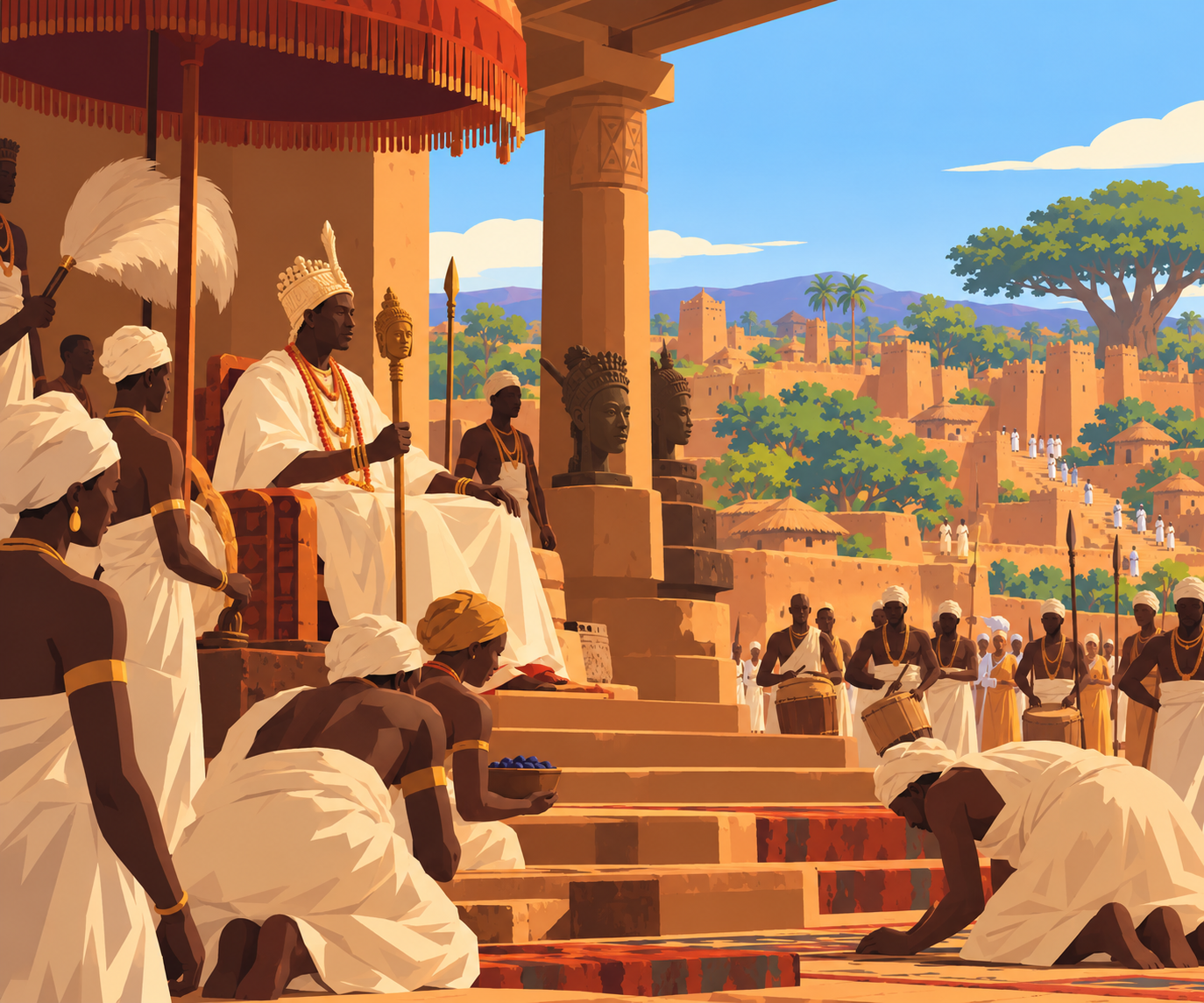
Kano now possessed increasingly formal institutions of government centred on a royal court.
The transformation from settlement to organised kingdom had become visible in the city itself.
Katsina was becoming another major centre
Kano was not alone.
To its northwest, Katsina developed into another important commercial and political state.
The relationship between the two cities was not always peaceful.
They competed for influence and access to commercial networks, while their political fortunes changed over time.
Katsina also became an important centre of Islamic scholarship.
Research into its political development suggests that the late fifteenth century may have been especially important in reshaping kingship there, with Muslim Wangara merchants and clerics interacting with existing local institutions.
Again, this shows how trade, religion and government could develop together.
A merchant arriving in a Hausa city might bring goods.
A scholar might bring books.
A ruler might see opportunities in both.
Zazzau looked south
Another major state developed around Zazzau, whose historic centre is associated with present-day Zaria.
Its geography placed it closer to regions south of the central Hausa heartland.
That mattered.
While Kano and Katsina became especially famous for northern and western commercial connections, Zazzau occupied an important position linking the Hausa world with communities farther south.
Over time it developed its own political institutions and military traditions.
Its later history would produce one of the most famous figures in Nigerian historical memory: Queen Amina.
But that story belongs to a later chapter.
At this point, what matters is that Zazzau demonstrates again why the Hausa states cannot be treated as one kingdom.
Each occupied a different geographical position.
Each developed particular economic and political strengths.
They competed without becoming one empire
This may be the defining feature of the Hausa states.
They shared much.
Language.
Commercial connections.
Elements of political culture.
Increasing Islamic influence.
Related traditions of origin.
But they remained politically divided.
Kano could fight Katsina.
One state could expand while another weakened.
A ruler might attempt to dominate neighbouring territory without permanently unifying Hausaland.
That competition may itself have encouraged development.
Cities strengthened walls. Rulers sought revenue. Markets competed for traders. Political institutions became more sophisticated.
Yet no Hausa ruler created a lasting empire containing all the major Hausa states.
Hausaland became culturally connected without becoming politically united.
The seven states were never the whole story
The famous Hausa Bakwai remain important to Hausa tradition.
But history quickly becomes larger than seven names.
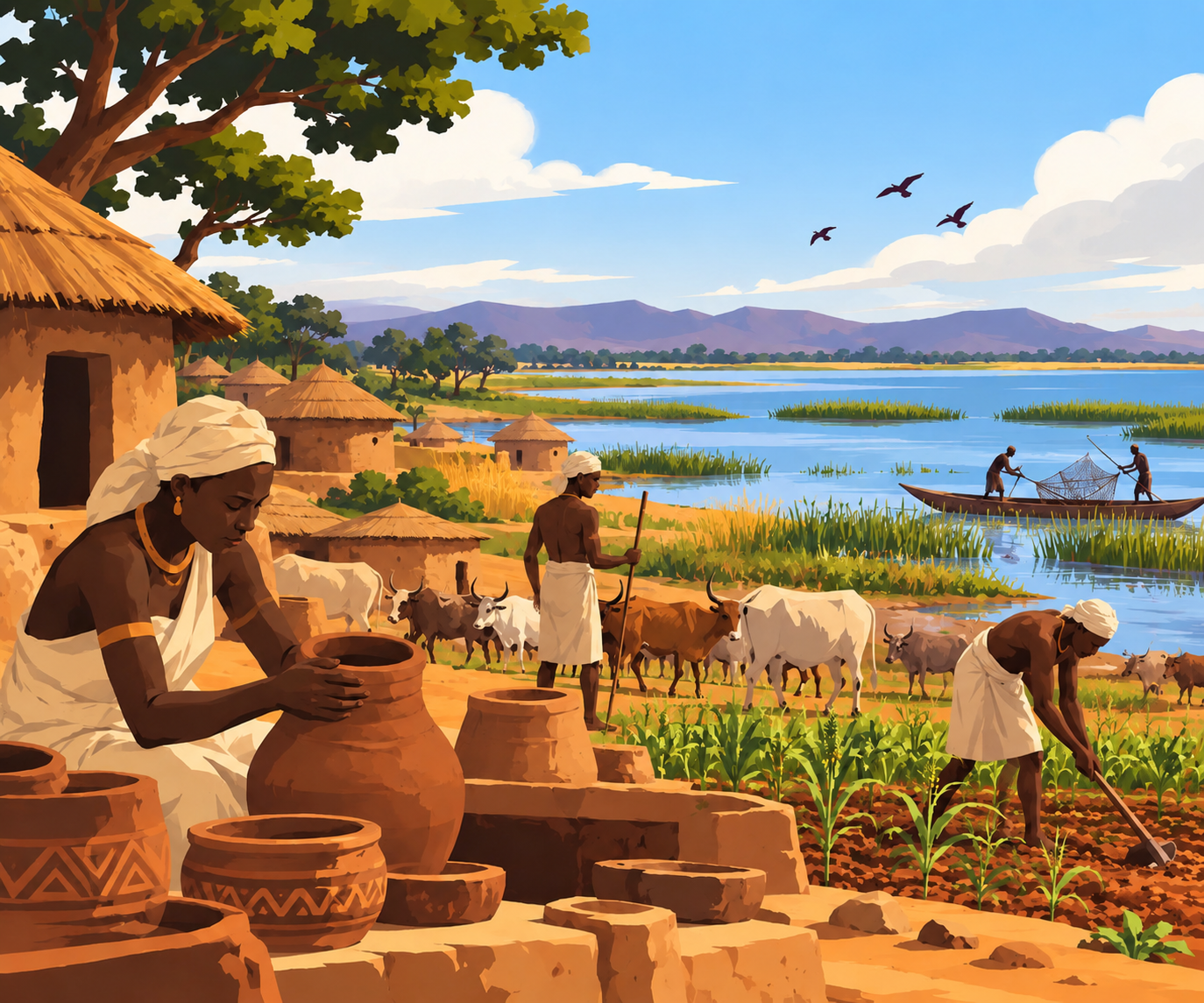
Other states became major political powers within the wider Hausa cultural region. Zamfara and Kebbi developed important kingdoms. Hausa-speaking communities expanded into new territories. Commercial settlements connected Hausaland to regions far beyond the original political centres.
The boundaries of Hausa culture and the boundaries of Hausa kingdoms were therefore not identical.
This distinction survives today.
A language can spread without a state conquering every place where it is spoken.
Hausa eventually became a major language of commerce and communication far beyond the traditional Hausa heartland. Modern linguistic scholarship describes tens of millions of first- and second-language speakers across northern Nigeria and neighbouring countries.
That modern reach has deep historical roots.
What we know
By the medieval period, a group of increasingly urbanised states had emerged across what is now northern Nigeria and southern Niger.
Kano, Katsina, Daura and Zazzau became important political centres, while other states formed part of the wider Hausa world.
These states developed organised governments, specialised crafts, agriculture and substantial commercial networks. Islam became increasingly influential, particularly among rulers, scholars and merchants.
Kano’s surviving walls, palace traditions and historic market preserve physical evidence of this long urban development.
Hausa language and culture also expanded beyond individual political boundaries.
What we don’t know
The earliest chronology of the Hausa states remains uncertain.
Traditional accounts provide rulers, genealogies and origin stories, but many were written down long after the earliest events they describe.
The Bayajidda legend therefore cannot simply be treated as a literal record of the founding of seven kingdoms.
Historians also disagree over aspects of early Hausa political development, the timing of Islamisation and how particular institutions emerged. Scholarship has repeatedly revised older interpretations as linguistic, archaeological and historical evidence has been reconsidered.
We should also avoid assuming that everyone living within an early Hausa kingdom possessed exactly the same ethnic identity understood by the word “Hausa” today.
Identity itself has a history.
Sources
Paul Newman, A History of the Hausa Language, Cambridge University Press — linguistic history and the geographical development of Hausa.
UNESCO, Ancient Kano City Walls and Associated Sites — historical information on Dala Hill, Kano’s walls, Kurmi Market and Muhammad Rumfa’s palace.
UNESCO, General History of Africa, Volume III — discussion of the spread of Islam into Hausaland and the difficulties surrounding early Kano chronology.
Finn Fuglestad, “A Reconsideration of Hausa History before the Jihad,” The Journal of African History — reassessment of kingship and political development in Katsina, Kano and other Hausa states.
W. K. R. Hallam, “The Bayajida Legend in Hausa Folklore,” The Journal of African History — historical analysis of the Bayajidda traditions and their possible components.
Historical scholarship reassessing early Hausaland — linguistic and cultural evidence concerning Hausa expansion and the traditions of the Hausa Bakwai.