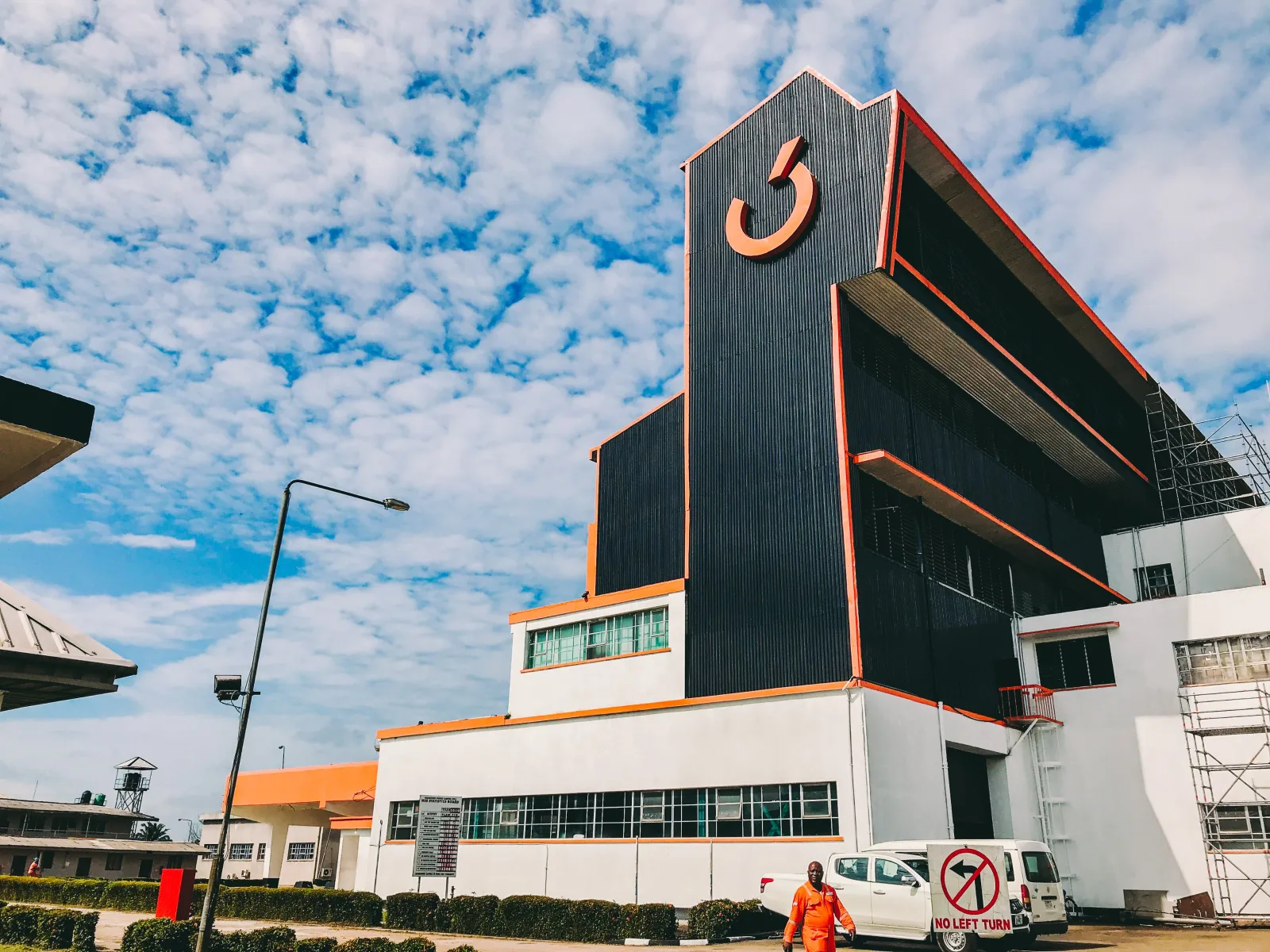
Transnational Corporation Plc (Transcorp), one of Nigeria's largest listed business groups, has reported a decline in revenue and profit for the nine months ended September 30, 2026.
According to its financial statements filed with the Nigerian Exchange, revenue fell by 13.3%, from ₦412.4 billion in 2025 to ₦357.4 billion in 2026.
Profit before tax declined by 10.5% to ₦111.4 billion, while profit after tax fell by 17.9% to ₦75.1 billion.
The company attributed much of the decline to difficulties in its electricity business, particularly damaged transmission infrastructure and inadequate gas supply.
Why Transcorp is generating less revenue
Transcorp operates major electricity-generating facilities in Ughelli, Delta State, and Afam, Rivers State.
Together, the company's power businesses have an installed generation capacity of approximately 2,000 megawatts.
However, having the capacity to generate electricity does not mean all that power can reach consumers.
In its October 26 financial announcement, Transcorp explained that vandalism affecting transmission and gas infrastructure disrupted operations.
Transmission infrastructure carries electricity from power stations into the national grid.
When transmission lines cannot accommodate the electricity produced, generating companies may have to reduce output.
Gas shortages create another problem because Transcorp's major power plants depend on natural gas to operate.
The company's power subsidiary also reported delays in obtaining essential turbine components because of international supply-chain disruptions.
These challenges contributed to a 13.7% decline in revenue at Transcorp Power Plc, from ₦308.5 billion to ₦266.1 billion.
Why this matters to Nigeria's electricity supply
Transcorp's difficulties highlight a wider problem in Nigeria's power industry: generating capacity alone cannot guarantee reliable electricity.
The system depends on three connected activities.
Power companies must generate electricity, transmission infrastructure must carry it across the country, and distribution companies must deliver it to consumers.
Problems at any of these stages can interrupt supply.
This means that even when a generating company has functioning equipment, damaged transmission lines or inadequate fuel can prevent it from supplying electricity at full capacity.
For households and businesses, such disruptions can contribute to unreliable power supply.
However, Transcorp's financial results do not establish precisely how many megawatts were unavailable or how many customers experienced outages because of these particular problems.
The company's finances are still growing in some areas
Despite the decline in earnings, Transcorp reported improvements in its financial position.
Total assets increased by approximately 13% to ₦1.13 trillion, while shareholders' equity rose to ₦387.8 billion.
Its cash holdings more than doubled, increasing from ₦21.9 billion at the end of 2025 to ₦45.9 billion in September 2026.
The company's hospitality business also performed more positively.
Transcorp Hotels recorded ₦15.5 billion in profit after tax, representing a 5% increase.
These improvements helped the group remain profitable despite difficulties in electricity generation.
What this means for Nigerians
For investors holding Transcorp shares, the results show how electricity-sector challenges can affect company earnings, even when a business has substantial generating capacity.
For businesses and households, they reveal an important limitation of Nigeria's power system.
Building additional power plants will not necessarily solve electricity shortages if transmission lines cannot carry the power produced or generating companies cannot obtain sufficient gas.
Addressing these constraints requires investment in transmission infrastructure, improved protection of critical facilities and more dependable fuel supplies.
Transcorp's declining earnings are a business story, but the underlying problem affects far more than its shareholders. Nigeria needs electricity infrastructure capable of delivering the power its generating companies can produce.