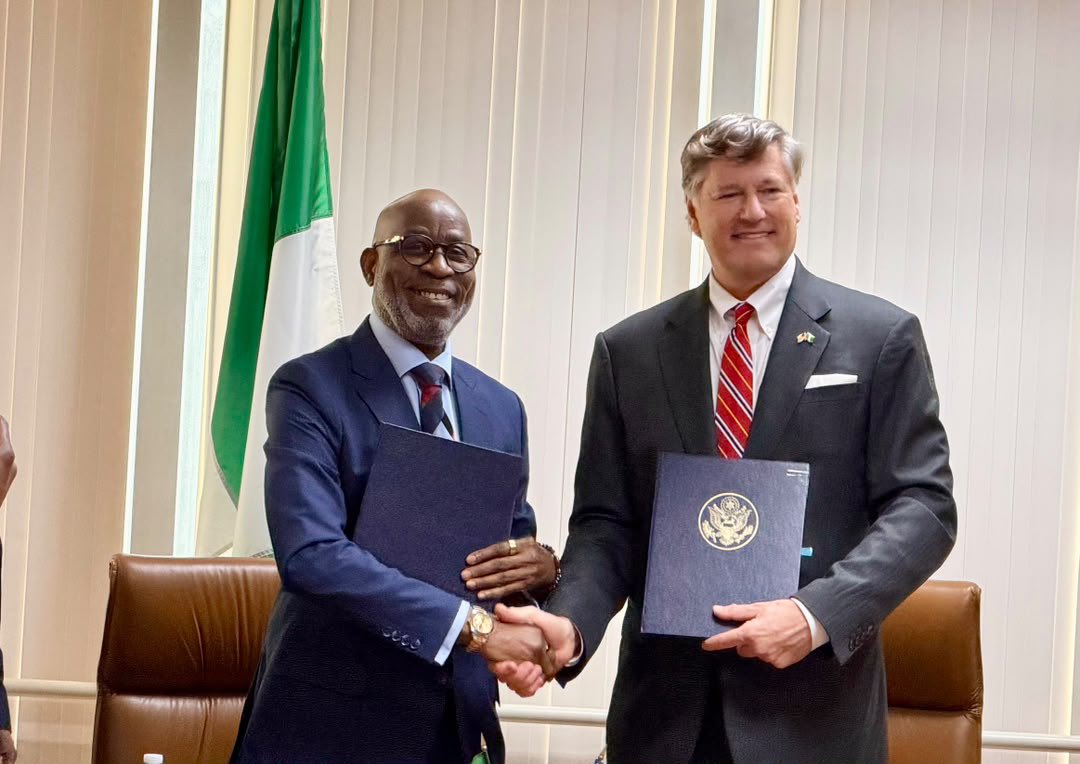
Nigeria and the United States have signed a framework to deepen cooperation and investment in Nigeria’s solid minerals sector.
The agreement was signed in New York by Nigeria’s Minister of Solid Minerals Development, Dele Alake, and U.S. Deputy Secretary of State Christopher Landau on the sidelines of the 81st United Nations General Assembly. (FMION)
It covers geological data and exploration, mineral development and processing, infrastructure and technical capacity.
The Federal Government says Nigeria’s mineral resources are worth about $700 billion, although this is a government estimate of the resources—not the amount the United States has agreed to invest. (FMION)
Nigeria wants more processing at home
A major part of the agreement is Nigeria’s push to move beyond exporting minerals in their raw form.
The government says it wants more minerals processed locally so that more of their value stays in Nigeria through businesses, jobs and technical skills.
Alake said the next stage will be to identify viable projects, attract investors and turn the framework into actual commercial partnerships. (FMION)
For the United States, the partnership also comes as countries seek more secure and diverse supplies of critical minerals used across industries including technology, energy and manufacturing.
What this means for you
There is no immediate change for the average Nigerian because the agreement itself does not guarantee that new mines, factories or jobs will appear immediately.
What matters is what follows.
If the framework leads to actual investment and more minerals are processed in Nigeria instead of being exported raw, it could create jobs, expand Nigerian mining businesses and bring more manufacturing activity into the country.
The bigger test will be whether both countries move from the signed agreement to real projects, investment and local processing.
What happens next
Nigeria and the United States are expected to begin identifying projects and commercial partnerships that can be developed under the framework.
The size of the eventual investment, the projects that will receive funding and how quickly they will begin have not yet been announced. (FMION)