Dangote Petroleum Refinery and Petrochemicals has concluded its initial public offering (IPO), attracting investor applications from 120 countries across six continents.
In a statement released on Tuesday, October 27, the company confirmed that investors from all 54 African countries participated in the application process.
The final figure represents an increase from the 119 countries reported earlier that day by Bloomberg, citing people familiar with the transaction.
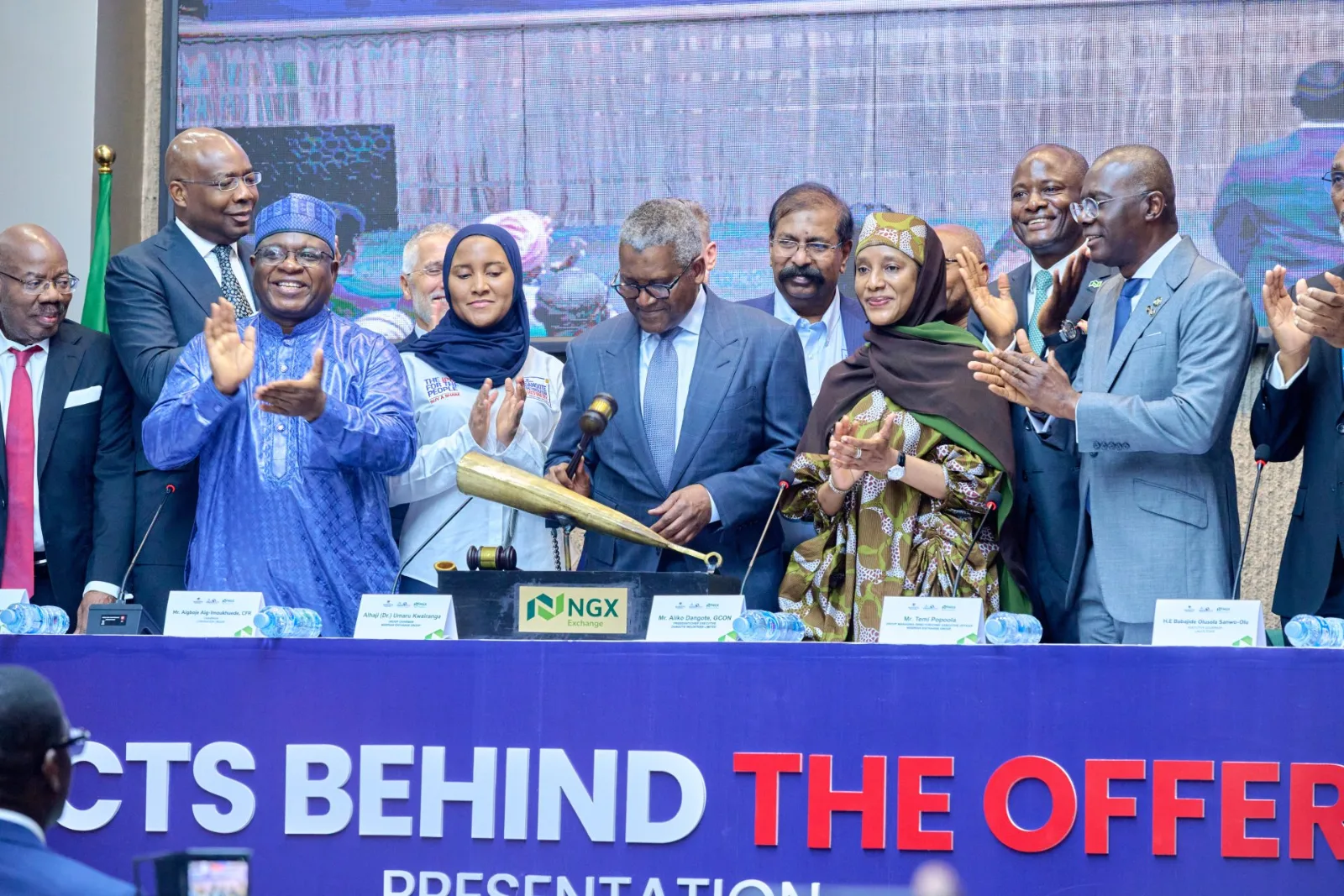
The offering, promoted as the People's IPO, was designed to allow individual and institutional investors to acquire ownership stakes in the Lagos-based refinery.
How much is Dangote raising?
The refinery offered 4.1 billion ordinary shares at ₦525 each, targeting approximately ₦2.15 trillion ($1.6 billion).
The public offering opened on September 14 and was initially scheduled to close on October 13.
However, the Securities and Exchange Commission (SEC) approved a two-week extension, moving the deadline to October 27.
The company said the additional time would allow more investors across African markets to complete their applications.
The minimum subscription was 10 shares, costing ₦5,250, an arrangement intended to make participation accessible to smaller investors.
According to the Nigerian Exchange Group, the offering is among the most significant capital-raising exercises undertaken on Nigeria's stock market.
Investor demand exceeds the fundraising target
Before the offering closed, Bloomberg reported that Nigerian and retail investors had submitted approximately $1.5 billion to $1.6 billion in fully funded commitments.
That was enough to cover the original fundraising target before accounting for additional international demand.
Separately, Reuters reported that orders from Nigerian investors had reached approximately ₦6.4 trillion, equivalent to roughly $4.78 billion.
These figures measure different forms of investor demand and should not be added together.
The company could potentially increase the offering by 30% through an over-allotment arrangement, raising approximately $2.1 billion.
However, strong demand does not mean all applications will receive the requested shares.
Final allocations remain subject to regulatory approval and the completion of the allotment process.
Why investors from 120 countries matter
Large African companies have historically relied on international financial institutions, private investors and foreign capital markets for substantial financing.
Dangote Refinery's IPO demonstrates the potential to raise significant capital through African financial markets while attracting investors internationally.
The offering used arrangements involving commercial banks, stockbrokers, fintech platforms and other financial institutions to reach investors across national borders.
Depositary receipt programmes and regional investment partnerships were also developed to improve participation outside Nigeria.
For the Nigerian Exchange, this represents an opportunity to expand the number of investors participating in the country's capital market.
However, applications from 120 countries do not necessarily mean the refinery will ultimately have shareholders in all 120. The final ownership distribution will depend on approved allocations.
What happens after the IPO?
The next stage involves reviewing applications and determining how shares will be distributed.
According to the refinery's official revised timetable, the company expects to complete the collation of applications by November 3.
The proposed basis of allotment is scheduled for submission to the SEC on November 10, with regulatory clearance targeted for November 17.
After approval, successful investors will receive their allocated shares, while excess application payments will be returned according to the approved timetable.
The shares are subsequently expected to begin trading on the Nigerian Exchange.
These dates remain indicative and may change.
What this means for Nigerian investors
For Nigerians who applied, the immediate concern is how many shares they will receive and when trading will begin.
Once listed, the value of those shares will depend on market demand, the refinery's financial performance and broader economic conditions.
Share ownership may provide opportunities for capital appreciation and dividends, but neither is guaranteed.
For Nigeria's capital market, the IPO could attract more individual investors and encourage other major private companies to consider public listings.
For the refinery, the funds could support its expansion plans, including the proposed increase in processing capacity to 1.4 million barrels per day.
The IPO's success will ultimately depend on more than the number of applications received. Its longer-term importance will be measured by shareholder participation, corporate performance and the value created for investors.