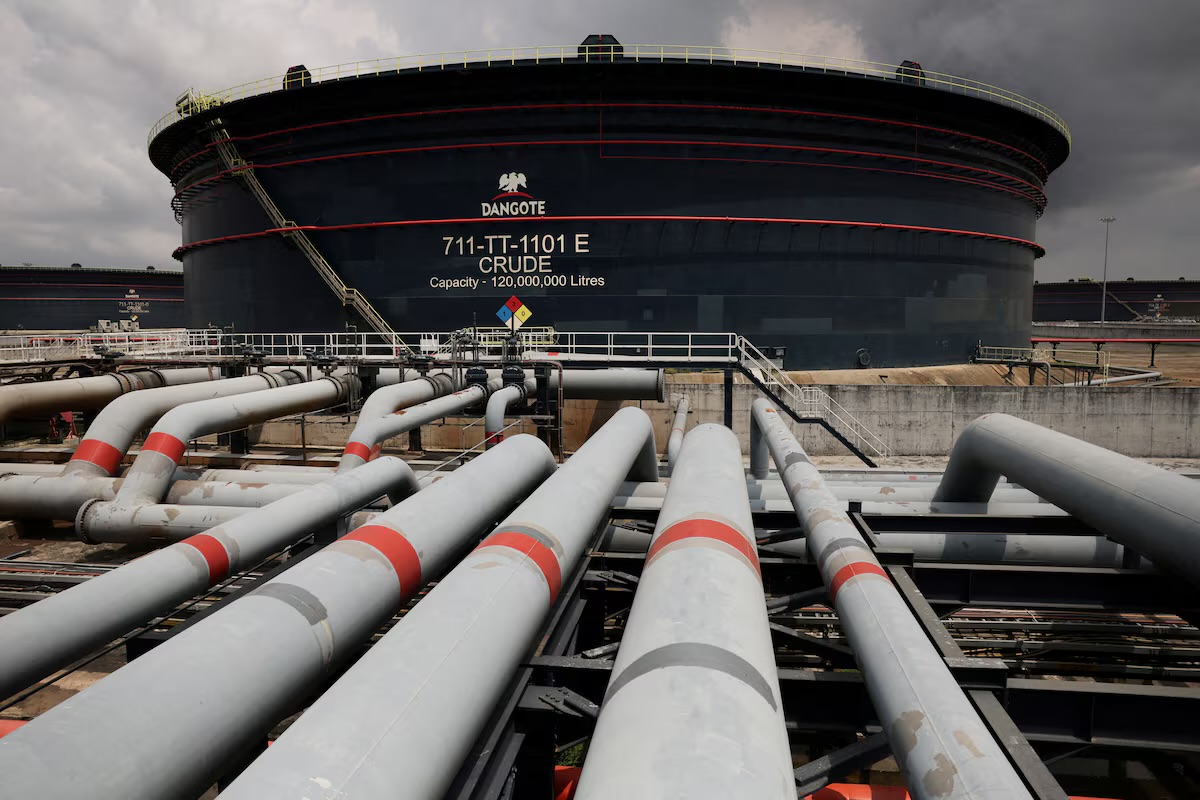
The investment programme is part of the group’s Vision 2030, under which Dangote is targeting more than $115 billion in annual turnover and about $35 billion in yearly profit by the end of the decade.
The plan reflects a broader shift in Dangote’s business: from being known mainly for cement and food production to becoming a much larger African industrial and energy group.
Dangote says its wider strategy is to build more industrial capacity within Africa and process more raw materials locally rather than relying heavily on imported finished products. Dangote Industries — About the Group
Spending could almost double
The group says it invested about $25 billion between 2020 and 2025, including major spending on the Dangote refinery, fertiliser production and cement expansion.
Its planned spending between now and 2030 is therefore almost twice that amount.
But the nearly $50 billion figure covers several projects and countries. It should not be read as money that has already been fully committed or spent.
Some projects are already operating and expanding, while others are still at planning, financing or early-development stages.
Dangote has also been discussing its Vision 2030 expansion with financial partners as it looks for support for future projects across Nigeria and the rest of Africa. Dangote Industries — Standard Bank backs future expansion
An $8bn LNG project is part of the plan
One of the biggest proposed investments is an $8 billion LNG plant with annual capacity of about 13 million tonnes.
The project would move Dangote deeper into gas and add another major energy business alongside the group’s refining operations.
Dangote is also expanding its Lagos refinery, which has already operated above its original 650,000-barrel-a-day design capacity. The company said in June that performance tests had reached 700,000 barrels a day. Dangote Industries — Refinery expansion update
Details such as the final location, financing structure and construction timetable for the proposed LNG plant have not yet been fully disclosed.
Kenya is becoming a major part of the expansion
Another major project is Dangote’s planned 700,000-barrel-a-day refinery in Lamu, Kenya.
The refinery is intended to serve Kenya and other East African markets that currently depend heavily on imported petroleum products.
The project is one of the clearest signs that Dangote’s future growth will not be centred only on Nigeria. The group already operates across several African countries and has continued discussing new investments in infrastructure, energy and manufacturing outside its home market. Dangote Industries — African expansion plans
The Lamu project is moving towards construction, although the separate land dispute involving local residents could affect activity on part of the proposed site.
The 2030 numbers are targets, not guaranteed results
Dangote’s $115 billion turnover and $35 billion profit figures are targets, not current results.
Reaching them would depend on several large projects being completed and operating successfully, including refinery expansion, fertiliser growth, new energy projects and investments outside Nigeria.
Projects of this size can also face delays from financing, regulation, construction problems and legal disputes.
So Vision 2030 is best understood as Dangote’s growth plan and ambition, rather than a result that is certain to happen exactly as announced.
Dangote has described Vision 2030 more broadly as a strategy built around industrial expansion, cross-border investment and greater African self-sufficiency in areas such as energy, manufacturing and infrastructure. Dangote Cement — Vision 2030
What this means
The bigger story is the growing scale of Nigerian-owned investment across Africa.
Dangote is increasingly moving from building large businesses mainly inside Nigeria to developing major industrial projects in other African markets.
If the plan is delivered, the group could become much more important in African refining, gas, fertiliser, power and infrastructure by the end of the decade.
The main thing to watch now is not the headline $50 billion figure itself, but which projects secure financing, begin construction and eventually start producing.