What is the programme about?
The Centre for International Studies and Cooperation (CECI) and TradeMark Africa (TMA) launched the Nigerian phase of Making Trade Work for Women in West Africa (MTWW) in Lagos on October 29, 2026.
Funded by Global Affairs Canada, the programme seeks to address the difficulties women experience when buying and selling goods across national borders.
It covers six countries: Nigeria, Ghana, Benin, Togo, Côte d’Ivoire and Burkina Faso.
According to CECI’s official project documentation, the initiative has a financial contribution of CAD 19.7 million and aims to support 80,000 people, at least 70% of whom will be women traders.
The programme is not entirely new. Its planning and implementation began before the Nigerian launch. What happened in October was the formal introduction of its Nigerian phase.
Why is cross-border trade difficult for Nigerian women?
For many traders, moving goods between Nigeria and neighbouring countries involves more than transportation costs.
There are customs requirements to understand, documents to obtain, checkpoints to navigate and sometimes unexpected delays that increase business expenses.
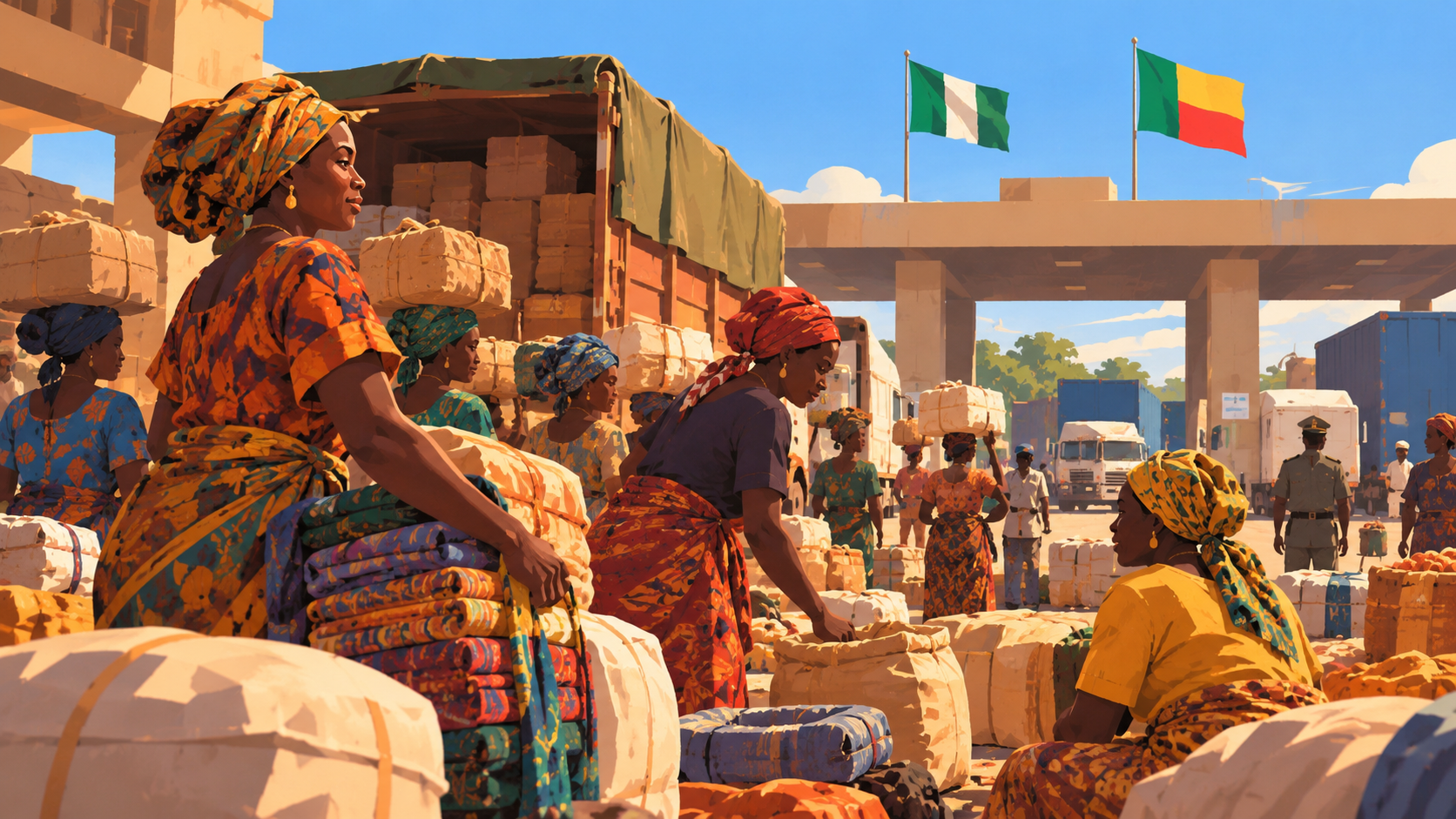
These difficulties are particularly visible along the Badagry–Seme corridor connecting Nigeria and Benin.
At the launch, TMA’s regional director, Kwamina Ekremet, described problems identified through engagements with traders and border officials, including multiple checkpoints, harassment, poor roads and unclear procedures.
One trader’s experience, recounted by Ekremet and reported by Premium Times, illustrated how a journey that previously took one day could stretch to three to five days.
Longer journeys can mean higher transportation costs, spoiled agricultural products and fewer opportunities to make a profit.
The problem is not simply that traders lack business skills. Existing trade rules and border facilities can also be difficult to understand or access.
In September, the Nigeria Customs Service introduced a facility for women traders at the Seme–Kraké border. The new programme will therefore need to build on existing efforts rather than duplicate them.
Where will the money go?
CECI lists the programme’s financial contribution as CAD 19.7 million, covering all six participating countries.
The organisation’s project page gives an implementation period of October 2024 to March 2030, although statements made during the Nigerian launch described a shorter 2024–2028 timeline. The difference has not been fully explained.
More importantly, CAD 19.7 million is not a fund being distributed directly to Nigerian women.
The programme is designed to finance activities such as trader education, stronger business associations, improved access to markets and financial services, and cooperation with border authorities.
Organisers also hope to increase participating women’s incomes by 40% and raise the number adopting sustainable trading practices by 50%.
These are programme targets, not verified achievements.
Nigeria’s specific funding allocation and the number of Nigerian beneficiaries have not been disclosed in the available project documents.
Will Nigerian traders receive grants or loans?
This is an important distinction.
The programme promises improved access to financial services, but that does not automatically mean participating traders will receive cash grants or direct loans.
At the Nigerian launch, a representative of the Bank of Industry discussed a separate financing product for women-owned businesses, offering loans of up to ₦50 million in eligible sectors.
However, that product does not cover ordinary trading activities, according to the launch reporting by Premium Times.
It would therefore be misleading to suggest that every woman trading between Nigeria and Benin can apply for ₦50 million under this new initiative.
The programme’s organisers have also not published a clearly established Nigeria-specific application process for individual traders.
What this means for Nigerians
For a Nigerian trader importing agricultural produce from Benin or supplying goods to neighbouring countries, simpler documentation and fewer unnecessary delays could make a meaningful difference.
Lower business costs could improve earnings and potentially reduce some expenses passed on to customers.
The programme could also help Nigerian businesses benefit from the African Continental Free Trade Area, which aims to make trade between African countries easier.
But its impact will depend on whether the promised support reaches traders and whether border agencies change the procedures that currently make trading difficult.
There is also a question of accountability: how many Nigerian women will benefit, what support will they receive, and will their trading costs actually fall?
The important measure of success will not be the size of the Canadian funding, but whether Nigerian traders can move goods more safely, quickly and profitably.