Twenty-three Nigerian states collected approximately ₦2.2 trillion in revenue between January and June 2026, compared with ₦1.75 trillion during the same period in 2025.
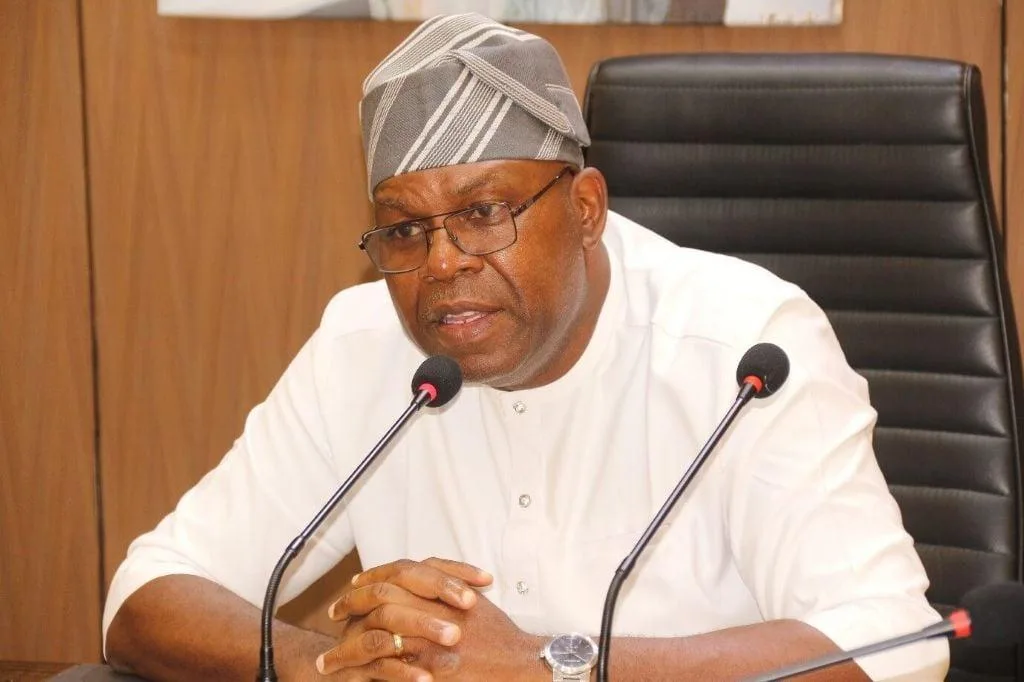
Olusegun Adesokan, Executive Secretary of the Joint Revenue Board (JRB), disclosed the figures during a press briefing in Abuja on October 28.
According to the board, the increase reflects efforts to improve tax collection, expand compliance and shift more responsibility towards individuals and businesses with greater financial capacity.
However, the figures cover only the 23 states that submitted revenue returns to the board, not all 36 states and the Federal Capital Territory.
How states are collecting more despite tax reductions
Nigeria introduced a new tax framework in January 2026, changing how individuals and businesses are taxed.
Under the revised personal income tax system, the first ₦800,000 of annual chargeable income attracts no tax. Higher income bands are taxed progressively, with rates reaching 25%.
Chargeable income is the amount remaining after applicable exemptions and deductions have been considered. It is not necessarily the same as a person's gross salary.
The changes are intended to reduce the financial burden on lower-income earners while ensuring that people with higher taxable incomes contribute more.
Adesokan said data from the 23 reporting states showed that approximately 92% of income earners covered by the assessment now pay either lower personal income tax or none.
This raises an important question: how are state governments collecting more revenue when most taxpayers covered by the assessment are paying less?
One explanation is that governments can increase total collections by improving compliance and bringing previously untaxed eligible individuals and businesses into the tax system.
Better record-keeping, stronger enforcement and more effective administration can also increase revenue without necessarily raising tax rates.
However, the JRB has not published a detailed breakdown alongside the announcement showing how much of the increase came from each factor.
What the ₦2.2tn figure actually tells us
The difference between the two reported totals is approximately ₦450 billion.
That represents a substantial increase in the amount collected over six months.
However, the board's reported 27% growth is a nominal figure, meaning it has not been adjusted for inflation.
If prices rise considerably, governments may collect more naira without gaining an equivalent increase in purchasing power.
The figures also do not establish whether every participating state recorded higher revenue. Strong performance in a few states could contribute significantly to the combined increase.
A more complete assessment would require state-by-state data showing collections, taxpayer participation, administrative costs and revenue sources.
Consequently, the figures provide early evidence of stronger revenue mobilisation but do not, by themselves, establish that the reforms have achieved all their objectives.
Twenty-one states adopt new tax laws
The revenue announcement coincides with another development in Nigeria's tax reforms.
According to the JRB, 21 states have enacted harmonised tax laws intended to reduce overlapping charges imposed by state and local government authorities.
The framework consolidates more than 100 existing taxes, levies and charges into nine broad categories.
It is designed to address situations where traders, transport operators and businesses face repeated or unauthorised payment demands.
The board has also announced plans to strengthen enforcement against illegal roadside tax collectors, working with the police and state revenue authorities.
However, passing legislation does not automatically eliminate illegal collections.
The effectiveness of the changes will depend on how consistently the laws are implemented and whether affected businesses can obtain protection against unauthorised demands.
What happens to the additional revenue?
State governments rely on internally generated revenue to finance public services, infrastructure and administrative responsibilities.
Higher collections could provide additional resources for schools, healthcare, transportation and other services.
They could also reduce the dependence of some states on allocations from the federal government.
However, collecting more revenue and spending it effectively are separate challenges.
The JRB's announcement does not establish how the additional collections have been spent or whether they have produced measurable improvements in public services.
For citizens, the important questions concern accountability: how much was collected, where was it spent and what improvements resulted?
What this means for Nigerians
For salary earners, the new tax structure could mean higher take-home pay where their tax obligations have fallen.
For business owners, greater consistency in tax administration could reduce the cost and uncertainty of dealing with multiple government authorities.
For state governments, improved revenue collection creates an opportunity to finance development without relying as heavily on federal allocations.
But the larger measure of success will be whether governments collect taxes fairly and use the money transparently.
Nigeria's tax reforms may be improving revenue collection, but their lasting success will depend on whether taxpayers experience both financial relief and better public services.