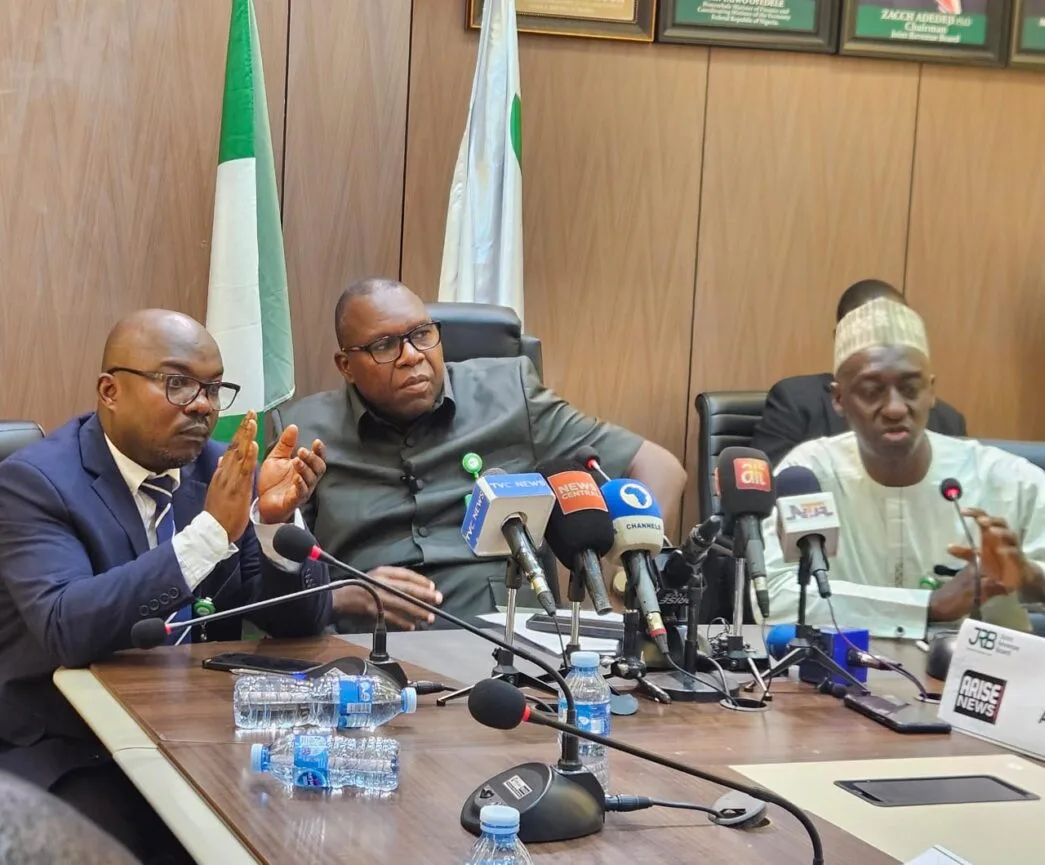
The Joint Revenue Board (JRB) has confirmed that 21 states have enacted the Model Harmonised Taxes and Levies Law, reducing more than 100 existing taxes and levies to nine broad categories.
Olusegun Adesokan, the board's Executive Secretary, announced the development during a press briefing in Abuja on October 28, describing it as part of efforts to simplify Nigeria's tax system and protect businesses from unauthorised collections.
The legislation was developed in collaboration with the Presidential Committee on Fiscal Policy and Tax Reforms as part of wider changes to Nigeria's tax administration.
Which states have adopted the new law?
The 21 states are Kebbi, Kaduna, Zamfara, Ekiti, Enugu, Abia, Anambra, Gombe, Adamawa, Yobe, Borno, Niger, Plateau, Benue, Kogi, Kwara, Nasarawa, Akwa Ibom, Bayelsa, Delta and Ondo.
According to Adesokan, 20 states had completed the process before another joined the list on October 27.
This leaves 15 states yet to enact the model legislation as of the board's announcement.
Notably, Lagos, Nigeria's largest commercial centre, was not among the states listed. However, this does not mean Lagos has no existing tax laws or that its current revenue collections are automatically unlawful.
States remain responsible for adopting and implementing the harmonisation framework through their legislative processes.
More than 100 taxes reduced to nine categories
Multiple taxation has long been a challenge for Nigerian businesses, particularly traders, transport operators and companies operating across state boundaries.
Businesses can encounter several payment demands from different government agencies, sometimes for similar activities or services.
The new framework is intended to reduce these overlapping obligations by bringing more than 100 fragmented taxes and levies under nine recognised categories.
They are income tax, stamp duties, property tax, road tax, haulage levy, economic development levy, harmonised levy, user charge and daily ticket.
User charges cover services such as parking, signage, waste disposal and certain registration activities.
Daily tickets include market levies, abattoir fees and some transport-related charges.
Importantly, reducing taxes to nine categories does not mean every business must pay nine taxes. Applicable obligations still depend on the nature of the business, its activities and the relevant laws.
Nor does harmonisation necessarily abolish every charge previously collected. Some existing obligations may instead be reorganised under broader categories.
Government moves against illegal roadside collections
One of the most consequential aspects of the reform concerns illegal revenue collection on Nigerian roads.
For years, commercial drivers and traders transporting goods between states have reported repeated demands for stickers, permits and other payments at checkpoints.
Such collections can increase transportation costs, particularly for businesses moving agricultural produce and other goods across the country.
In December 2025, the JRB announced the abolition of revenue stickers and emblems, while adopting a policy of zero tolerance towards roadblocks established for unauthorised tax collection.
Adesokan said the board was working with the Nigeria Police Force and state revenue authorities to establish an enforcement structure against illegal collectors.
However, he acknowledged that multiple taxation and harassment remained widespread despite the reforms.
The board has not announced a confirmed nationwide commencement date for the latest enforcement measures.
Why this matters to the cost of doing business
Nigeria's economy depends heavily on the movement of goods between states.
Agricultural produce, manufactured products and imported goods frequently travel across several jurisdictions before reaching their final markets.
When transporters encounter repeated payment demands, those expenses can become part of the overall cost of delivering goods.
Businesses may absorb some costs, but others can be passed on through higher selling prices.
Reducing unnecessary charges could therefore improve the business environment and lower certain distribution expenses.
However, the reform does not guarantee immediate reductions in consumer prices. Fuel costs, road conditions, insecurity and other transportation expenses remain important factors.
What protections do taxpayers have?
The reforms also introduce stronger institutional arrangements for handling complaints about tax administration.
The Office of the Tax Ombud, established under the Joint Revenue Board framework, is intended to provide an independent channel for resolving certain disputes between taxpayers and revenue authorities.
The office can help address complaints about improper assessments, unfair treatment and other tax-related grievances within its mandate.
For business owners, an important precaution is to verify payment demands through the relevant state revenue authority and retain official receipts.
The JRB has also published guidelines to help taxpayers understand their obligations under the new framework.
What this means for Nigerians
For traders and transport operators, the reforms could reduce repeated payment demands and the uncertainty associated with moving goods between states.
For small businesses, clearer tax obligations could make financial planning easier and reduce the time spent dealing with different revenue agencies.
However, passing legislation is only the beginning.
Its effectiveness will depend on whether states enforce the new rules, remove unauthorised collectors and make legitimate tax obligations understandable to ordinary citizens.
The real test of Nigeria's tax harmonisation reforms will not be how many states pass the laws, but whether traders, transporters and businesses actually experience fewer illegal charges and lower compliance costs.