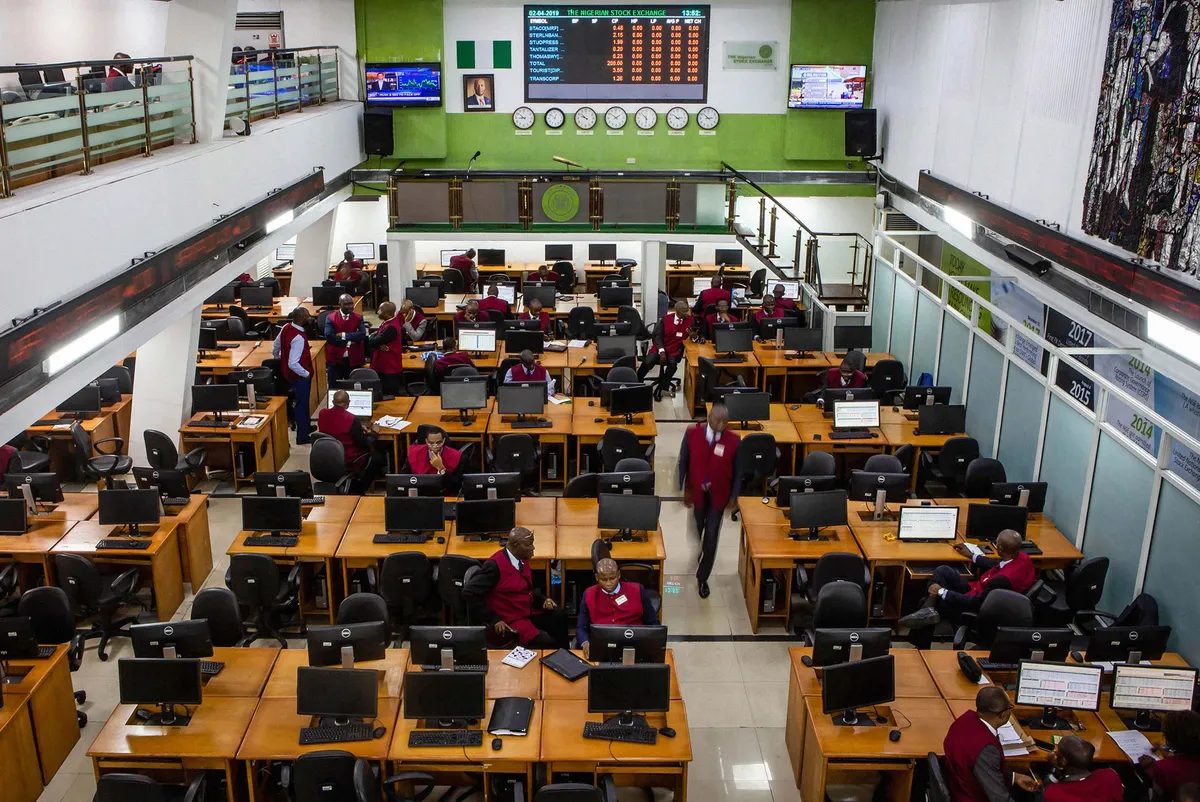
The NGX (Nigerian Exchange Limited) All-Share Index, which tracks the overall performance of listed shares, fell by 176.75 points, or 0.07%, to close at 250,096.75 points.
The combined market value of listed companies also declined from approximately ₦162.50 trillion on Tuesday to ₦162.39 trillion on Wednesday.
The figures are reflected in the Nigerian Exchange’s official market data, which recorded the October 7 closing index at 250,096.75 points.
Banking stocks lead the decline
The banking sector recorded the largest decline among the major sectors, with its index falling by 0.36%.
Wema Bank shares dropped by 3.02%, while Ecobank Transnational Incorporated fell by 1.47%. United Bank for Africa declined by 1.22%, Access Holdings by 0.99%, and Guaranty Trust Holding Company by 0.75%.
Other sectors also recorded losses. The Consumer Goods Index declined by 0.08%, while the Oil and Gas Index fell by 0.09%.
However, not every company lost value. The Insurance Index gained 0.03%, while the Industrial Goods Index recorded a marginal increase.
The sector figures are detailed in the October 7 market report.
Trading continued despite falling prices
Investors exchanged approximately 446.91 million shares across 38,808 transactions during Wednesday’s session.
That represented a 22.83% reduction in trading volume compared with the 579.17 million shares exchanged on Tuesday.
The market’s continued decline has been associated with profit-taking, where investors sell shares to secure gains following earlier price increases.
A falling market does not necessarily mean that every listed company is performing poorly. Share prices also respond to investor expectations, demand and wider economic conditions.
The six-session decline began on September 29, with the market also recording a ₦256 billion reduction in value on October 6.
What the ₦110 billion loss actually means
The reported ₦110.16 billion loss does not mean that amount was withdrawn from investors’ bank accounts.
It represents the reduction in the combined market value of listed companies, calculated using their share prices at the close of trading.
For example, when the price of a company’s shares falls, the estimated market value of that company also falls, even if shareholders have not sold their investments.
For Nigerians investing through shares, mutual funds or pension portfolios with stock-market exposure, sustained price declines can affect investment valuations.
The important question is whether the current decline is a temporary adjustment after earlier gains or the beginning of a longer period of market weakness. Six consecutive negative sessions show continued selling pressure, but they do not establish what direction the market will take next.