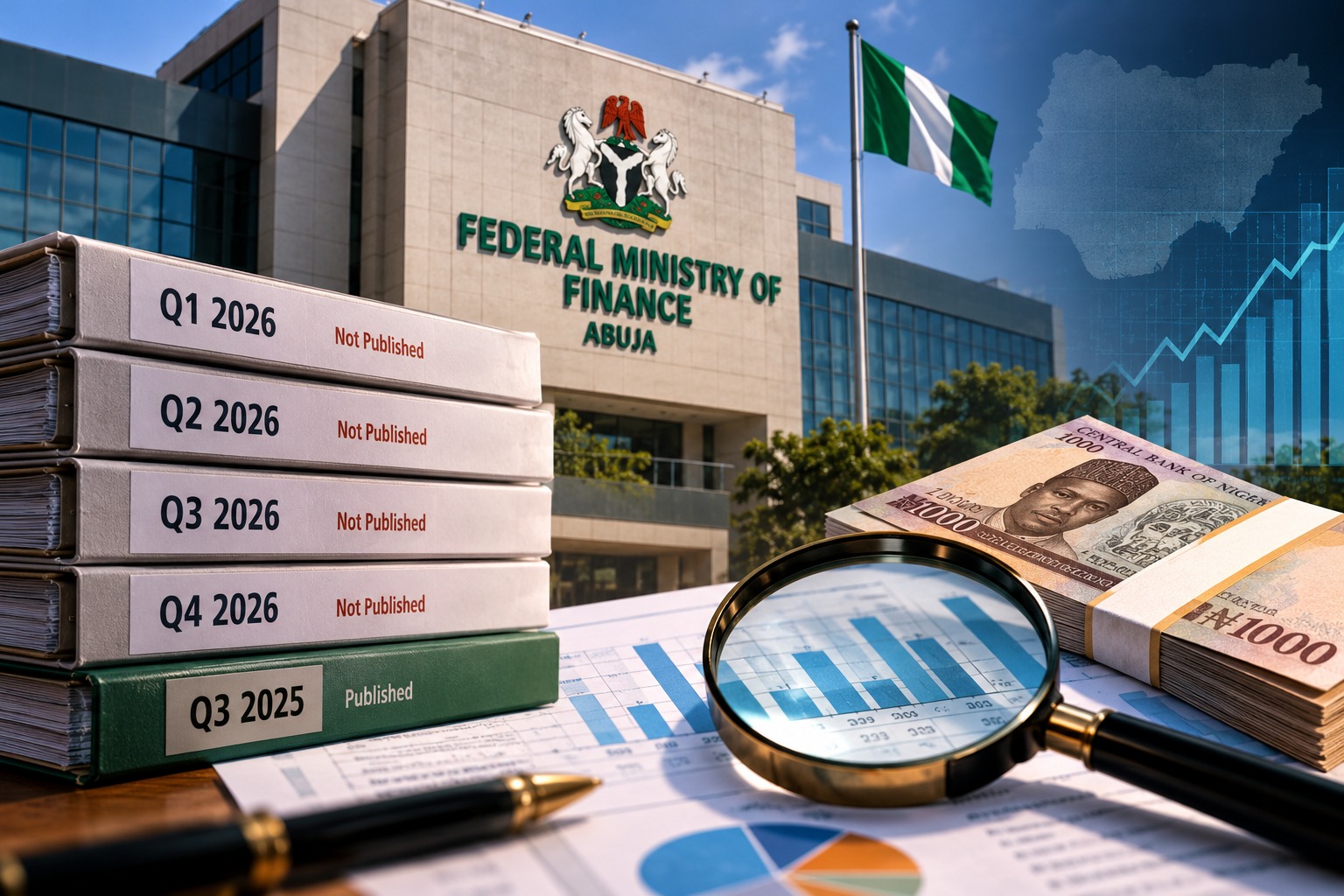
The Federal Government recently reported distributing ₦658.9 billion to 10.46 million poor and vulnerable households by September 2026. The figure, disclosed in the World Bank’s latest Nigeria Development Update, represents one of the country’s largest social assistance interventions in recent years.
There is something worth recognising here. For a family struggling to buy food, pay school expenses or access healthcare, even a modest amount of money can provide meaningful relief. Dismissing such assistance because it does not solve every economic problem would be unreasonable.
But there is a question that Nigeria must confront: What happens to these households when the money stops?
That question exposes the difference between helping people survive poverty and creating the conditions that allow them to escape it.
Nigeria’s poverty problem existed long before the latest cash transfers
In November 2022, the National Bureau of Statistics published one of the most extensive investigations into poverty ever conducted in Nigeria.
Its Multidimensional Poverty Index found that approximately 133 million Nigerians, representing 63% of the population at the time, were multidimensionally poor.
Unlike conventional income measurements, multidimensional poverty examines deprivation across different aspects of life, including education, healthcare, sanitation, housing and access to essential services.
This distinction matters.
A family may earn enough money to purchase basic food but still live without safe drinking water, reliable electricity or access to a functioning hospital. Another may have an income that appears sufficient on paper but spend a substantial proportion of it transporting children to school or obtaining medical treatment.
In both cases, poverty cannot be fully understood through the amount of money available to the household.
The 2022 statistics predate the current cash transfer programme and should not be presented as a measurement of its performance. But they demonstrate the scale and nature of the problem the programme is expected to address.
Nigeria is not dealing simply with a shortage of household cash. It is dealing with an economy and public-service system that leave millions of people without the means to build secure and productive lives.
Why the government turned to direct payments
Following the removal of petrol subsidies in May 2023 and changes to Nigeria’s foreign exchange system, households experienced substantial increases in living costs.
These reforms were introduced to address financial pressures on the government and correct longstanding economic distortions. Yet their consequences were felt immediately by families who depended on transportation, imported goods and businesses affected by higher operating costs.
To ease the burden, the government proposed transferring ₦75,000 to each of 15 million vulnerable households in three instalments.
The programme, supported through the World Bank’s National Social Safety Net Programme Scale-Up, was intended to cushion the immediate effects of economic reforms.
That objective was reasonable.
However, by September 2026, the government reported reaching 10.46 million households with ₦658.9 billion.
This represents roughly 70% of the original 15-million-household target.
Dividing the total reported payment by households reached gives approximately ₦63,000 per household. That is only a mathematical average, not evidence that every family received that amount.
There are still questions about payment regularity, outstanding entitlements and the practical impact of the transfers.
The World Bank itself has called for improvements in coverage, adequacy and continuity.
These are not minor administrative concerns. Assistance that arrives late, reaches only some eligible households or loses purchasing power can provide considerably less relief than originally intended.
Cash transfers work. The evidence should not be ignored
One of the weakest arguments against cash transfers is that giving money to poorer households merely encourages dependence.
Evidence does not support such a sweeping conclusion.
A 2025 World Bank research paper, Cash Is Queen: Local Economy Effects of Cash Transfers to Women in West Africa, examined the effects of unconditional cash transfers to extremely poor households in northern Nigeria.
The researchers found that the programme increased microenterprise formation among women receiving payments by 12 percentage points in the short term.
A year after payments ended, business ownership among recipients was 20 percentage points higher than among comparable women in communities without the programme.
The research also documented improvements in consumption, food security and economic activity that extended to some households that had not directly received transfers.
These findings complicate the suggestion that direct financial assistance is inherently unproductive.
For some recipients, receiving money creates the opportunity to start a small business, purchase tools, acquire inventory or make investments previously beyond their reach.
The lesson is not that cash transfers are ineffective. It is that their outcomes depend on their design, scale and the wider conditions in which people receive them.
The northern Nigeria study examined a particular programme implemented years before the present intervention. Its results cannot simply be attributed to the current ₦658.9 billion programme.
Nevertheless, it establishes that financial support can do more than temporarily improve consumption.
Cash transfers can be a foundation for economic opportunity. They cannot, on their own, guarantee that the opportunity will last.
A country cannot transfer its way out of structural poverty
Consider a household receiving ₦25,000 in monthly assistance.
That money may help with food, medicines or school expenses. It might also allow a small trader to purchase additional stock.
But suppose the household lives in a community without electricity, where businesses depend on expensive generators and farmers struggle to transport produce to urban markets.
The transfer does not repair the road, reduce production costs or create a reliable electricity supply.
Suppose the same household has a child attending a public school without sufficient teachers. The payment cannot replace the years of learning that child may lose.
And if an adult in the household cannot find productive employment, three months of assistance will not automatically create a source of income.
This is why the distinction between social protection and economic development is important.
Social protection helps households manage risks and meet immediate needs. Economic development should expand the opportunities available to them.
A serious poverty reduction strategy requires both.
The government cannot reasonably expect cash assistance to compensate indefinitely for inadequate infrastructure, weak public education, limited access to healthcare and an economy that creates too few well-paying jobs.
Nor should citizens be expected to judge progress solely by the number of households appearing on a payment register.
That number measures the reach of a programme. It does not, by itself, measure sustained improvement in people’s economic circumstances.
Nigeria’s growing public revenue creates a bigger responsibility
There is another reason the debate should extend beyond direct payments.
According to the World Bank’s October 2026 Nigeria Development Update, Nigeria’s gross federation revenues increased by 69% in real terms between 2023 and 2025.
State governments benefited significantly, with aggregate state revenues rising by approximately 93% in real terms over the same period.
This is a substantial increase in the public resources available for development.
Yet the World Bank found that, although spending on education, healthcare and social protection increased, it grew more slowly than expenditure on economic infrastructure.
Education’s share of total state expenditure declined from 14.9% in 2021 to 12.1% in 2025, while healthcare remained around 7%.
Economic infrastructure matters enormously. Better roads, electricity and transport networks can support businesses and employment.
But investment in infrastructure cannot be separated from investment in people.
A road can connect a rural community to a market, but farmers still need productive tools, financing and access to buyers. A new industrial facility may attract investors, but firms also need workers with appropriate skills.
The question for governments, particularly states receiving larger allocations, should therefore be broader than how much money they spend.
What lasting improvements are these funds producing in education, healthcare, productivity and household incomes?
These are the outcomes against which public spending should be assessed.
What a serious poverty reduction strategy should look like
Nigeria does not need to choose between giving people financial assistance and investing in economic opportunity.
It needs to connect the two.
First, the country should establish a predictable social protection system that reaches vulnerable households when they need assistance. This would require reliable beneficiary identification, transparent eligibility rules, published payment information and mechanisms for resolving complaints.
Second, assistance should exist alongside sustained investment in basic public services.
Affordable healthcare reduces the financial shock of illness. Functional public schools give children stronger opportunities later in life. Access to clean water and electricity can reduce household expenses while improving productivity.
Third, governments must pay greater attention to the kinds of jobs the economy creates.
Employment alone does not guarantee financial security. A person working long hours in a low-productivity business may still struggle to afford essential needs.
Policies supporting agricultural productivity, small business financing, manufacturing, skills development and reliable infrastructure can help increase what people earn from their work.
Finally, government should measure success through household outcomes, not expenditure announcements.
Instead of reporting only how many people received transfers, authorities should also investigate whether recipient households have more reliable access to food, improved school attendance, better health outcomes, growing business income or greater financial resilience.
Those indicators are more difficult to measure than the amount disbursed. But they provide a more meaningful picture of progress.
The strongest case for cash transfers is also the case for doing more
There is a legitimate argument that building infrastructure, improving schools and creating productive employment all take time.
People experiencing immediate hardship cannot be told to wait for the benefits of a five-year development plan.
That is precisely why cash transfers remain necessary.
A government that abandons direct assistance before households have meaningful alternatives risks worsening hardship rather than encouraging independence.
But the opposite mistake is equally serious: expanding temporary assistance while failing to address the conditions that continually make people vulnerable.
The correct approach is not to end cash transfers. It is to strengthen them while pursuing the deeper reforms that reduce the number of people who need emergency support in the first place.
Nigeria’s latest economic figures suggest that greater public resources are becoming available, even as the benefits of growth have yet to reach many households.
That creates both an opportunity and an obligation.
A government should be proud when it helps millions of people through difficult times. It should be more ambitious about building an economy in which fewer people are forced to depend on emergency assistance to survive.
The ₦658.9 billion distributed to vulnerable households may provide important relief. It cannot be the final measure of Nigeria’s success against poverty.
Because the purpose of poverty reduction is not simply to help people endure difficult conditions.
It is to change those conditions.