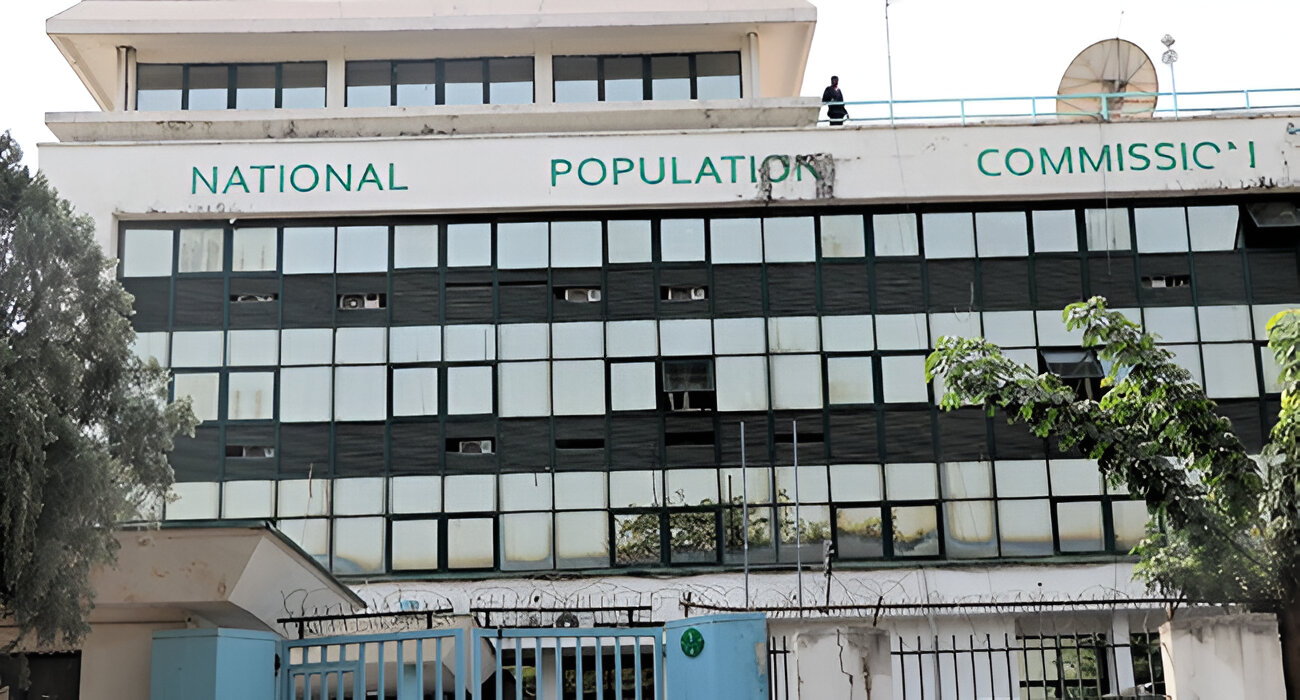
Nigeria’s Auditor-General has raised concerns over more than ₦245 billion in contracts and payments linked to the postponed 2023 population census, including purchases without adequate proof of delivery, inflated contract prices and breaches of procurement rules.
The findings concern the NPC (National Population Commission) and are contained in the Auditor-General’s 2024 Annual Report on Non-Compliance, which examined the commission’s financial activities for 2023.
The report, submitted to the National Assembly in July 2026, identified weaknesses in how the commission awarded contracts, made payments and accounted for equipment purchased for the census.
The findings were detailed in an October 8 investigation by Premium Times. The Auditor-General’s official website also lists the 2024 audit reports.
₦131.56 billion paid for devices without adequate delivery records
The largest finding involves ₦131.56 billion paid for 800,000 handheld digital devices intended to collect information during the population census.
The NPC told auditors that 760,000 devices had been received. However, the audit found that the commission could not provide acceptable delivery records, including store receipts, waybills and inspection reports.
Auditors also reported that they were denied access to physically inspect where the devices were supposedly stored.
This does not establish that all 800,000 devices are missing. It means the commission could not adequately prove their delivery and whereabouts during the audit.
Other contracts also raised concerns
The Auditor-General identified several additional problems:
₦1.45 billion: Alleged inflation in the prices of three contracts for digital census devices.
₦4.43 billion: A software subscription paid for after the census was postponed, with no verified evidence of the intended operational benefit.
₦96.8 billion: Device procurement contracts questioned for allegedly breaching instructions from the Bureau of Public Procurement.
₦6.23 billion: An information technology project undertaken without an approved document detailing the quantities and costs of materials and work.
₦4.74 billion: An IT contract awarded to a company auditors said lacked the required qualifications.
Some findings concern related procurement arrangements, so the figures should not automatically be treated as separate amounts of money lost.
Why was the census never conducted?
Nigeria’s last national population census took place in 2006.
A new census was scheduled for May 2023, but former President Muhammadu Buhari postponed it shortly before it was due to begin.
According to the NPC’s official April 29, 2023 statement, considerable preparation had already taken place, including purchasing digital devices and developing the technology needed for the exercise.
The postponement left questions about the funds spent on equipment and services that had been purchased for a census that did not take place.
What happens to the questioned money?
The Auditor-General recommended that the commission account for the questioned payments before the National Assembly’s Public Accounts Committees, recover funds where required and provide evidence of repayment to the Treasury.
According to the audit findings, the NPC did not respond to several queries, leaving those findings unresolved.
However, an audit query is not proof that ₦245 billion was stolen. It identifies payments, contracts or procedures requiring explanations, supporting documents, recovery or further investigation.
There has been no independently verified confirmation that the questioned amounts have been recovered.
What this means for Nigerians
A national census helps governments determine where to build schools, hospitals, roads and other public facilities. It also provides data used to plan services and distribute resources.
Nigeria’s continued reliance on population estimates makes the absence of a recent census particularly significant.
The findings raise two important questions: What happened to the equipment and money allocated to the postponed census, and how much of that investment can still be used for a future exercise?
Those answers will matter as Nigeria prepares for another population count.