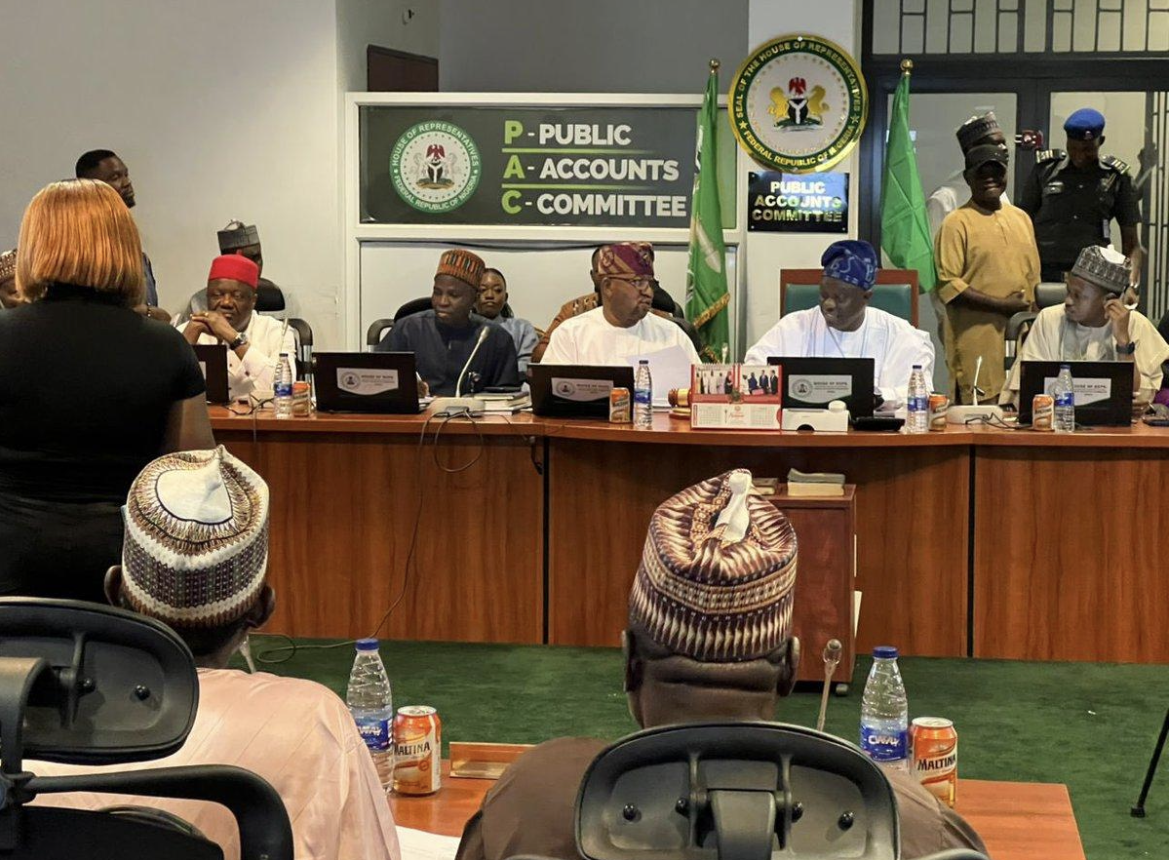
The House of Representatives has summoned Nigeria’s finance minister and accountant-general over ₦75 billion reportedly borrowed from funds meant for basic education. Lawmakers want the money returned and a clear repayment timetable.
The House Public Accounts Committee raised the issue during a hearing in Abuja on Friday, October 16, 2026.
The money belongs to UBEC (Universal Basic Education Commission), which supports public primary and junior secondary education across Nigeria.
According to TheCable’s October 17 report, Finance Minister Taiwo Oyedele and Accountant-General Shamseldeen Ogunjimi must appear before the committee on Thursday, October 22, to explain how the outstanding funds will be repaid.
Why was the money borrowed?
Lawmakers questioned the practice of withdrawing money from government agencies to meet other financial obligations without clearly agreed repayment terms.
Ezeoke Christopher, a deputy director representing the accountant-general’s office, acknowledged the borrowing arrangements.
He explained that the government had used such arrangements to address funding shortages and meet obligations, including personnel costs reportedly exceeding ₦1 trillion monthly.
However, lawmakers argued that government institutions should not lose access to money needed for their operations because of financial decisions made elsewhere.
The committee also raised concerns about deductions reportedly reaching 50% of some agencies’ revenue.
Why the ₦75bn matters to education
UBEC receives funding to support school construction, classroom rehabilitation, teaching materials and teacher development.
Under the Universal Basic Education funding framework, the federal government allocates 2% of its Consolidated Revenue Fund to basic education.
Part of the money is distributed through matching grants, requiring state governments to contribute their share before accessing federal funding.
At the hearing, UBEC officials disclosed that more than 20 states accessed their matching grants in 2025, while more than 13 had done so in 2026.
Several states, including Lagos, Ogun and Anambra, still had outstanding counterpart-funding requirements.
The committee fears that delayed repayment could affect the commission’s ability to finance education programmes.
However, it has not established which specific school projects, if any, have been delayed by the ₦75 billion debt.
What happens next?
The committee has requested a definite repayment timetable from the finance minister and accountant-general.
Lawmakers are also considering changes to the Universal Basic Education Act that would allow UBEC to redirect certain grants left unaccessed by states for two years.
That proposal has not yet become law.
What this means for Nigerians
Nigeria’s public schools depend on predictable funding for classrooms, learning materials and other essential facilities.
When money allocated to education is unavailable, planned improvements may face delays.
The central question is not only whether the ₦75 billion will be repaid, but how government agencies can protect funds meant for essential public services.
The October 22 hearing is expected to provide further details about the borrowing arrangements and repayment plans.