
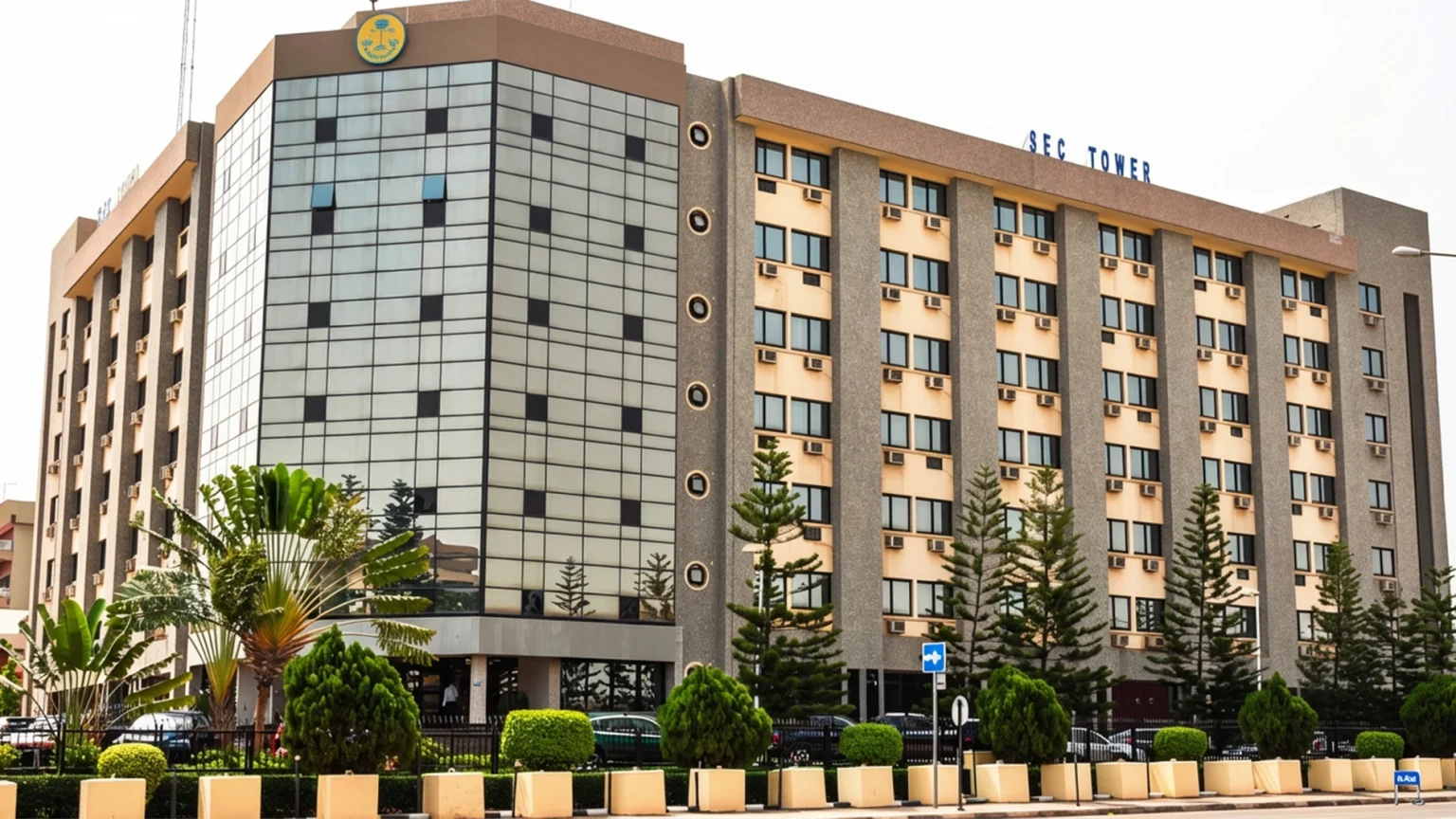
Nigeria’s SEC (Securities and Exchange Commission) has given public companies and some major capital-market operators until October’s 15, 2026, to submit plans showing how they will prepare for new sustainability-reporting requirements.
The directive was published by the SEC on September 23. It applies to all public companies and what the regulator calls significant public-interest capital-market operators. These include exchanges, clearing houses, central securities depositories and trade repositories.
What companies must prepare for
Nigeria is moving towards mandatory use of the IFRS (International Financial Reporting Standards) Sustainability Disclosure Standards.
There are two main standards involved. IFRS S1 covers sustainability-related financial information, while IFRS S2 focuses on climate-related risks and opportunities.
The SEC wants affected companies to show how ready they are before mandatory reporting begins.
Their plans must cover areas such as board oversight, gaps in their current reporting systems, data collection, internal controls, staff training and the challenges they expect to face.
When the new rules take effect
Mandatory sustainability reporting will begin for public-interest entities, including public companies, for accounting periods starting January 1, 2028.
Small and medium-sized businesses are expected to enter the mandatory phase from January 1, 2030. Until then, eligible organisations can continue adopting the standards voluntarily under the FRCN (Financial Reporting Council of Nigeria) roadmap.
What this means for you
For most Nigerians, the October 15 deadline does not create a new personal requirement or tax.
Its effect is more relevant if you invest in Nigerian public companies or want to understand how businesses are exposed to issues such as climate change, energy use and other sustainability risks.
Over time, the new reporting system is intended to make this information easier to compare across companies. That could give investors more information when deciding where to put their money.
It does not, however, mean that a company is automatically environmentally responsible simply because it files a sustainability report. The quality of the information and how it is verified will still matter.
What happens next
Affected companies now have until October 15 to send their implementation plans and expected challenges to the SEC.
The commission says it will continue monitoring companies as Nigeria moves towards mandatory reporting in 2028.